Many people still think of foodtech as being just about food delivery and online orders. But this is an outdated idea.
The market for delivery has grown a lot. These services now make up more than half of the market. But the industry itself has long gone beyond this framework. It has become much broader and deeper.
Today, foodtech covers the entire chain, from making and delivering food to how customers are treated and managing restaurants.
In this article, we'll look at what technologies and trends are going to shape the market in 2026 — and how businesses can use them.
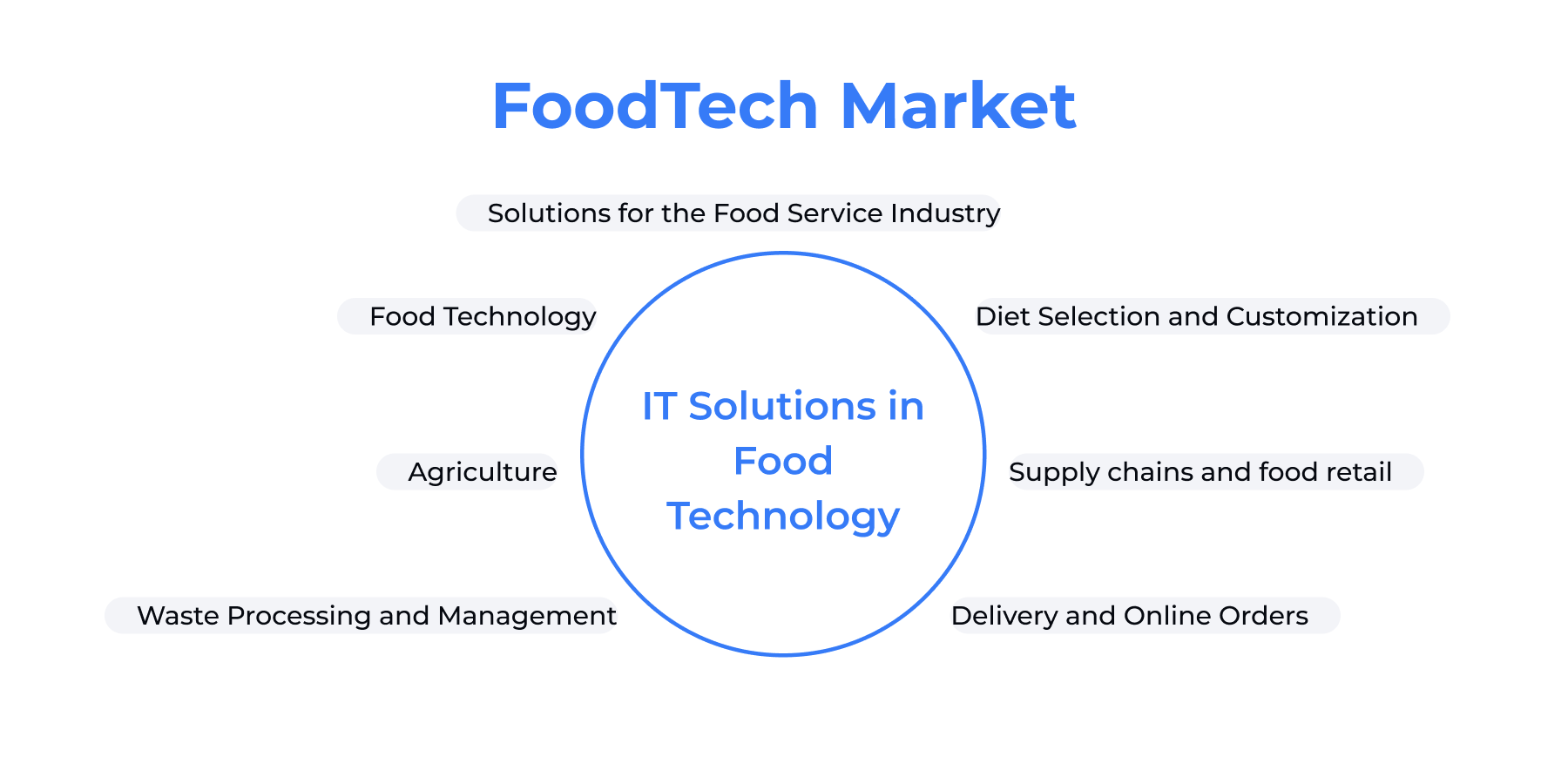
In Europe, especially in France and the Netherlands, FoodTech solutions are growing and becoming more innovative. These solutions include growing food in cities, reducing food waste, automating restaurants, and introducing new service formats.
In the food industry, we can develop apps for restaurants and coffee shops, solutions for farms, kitchen automation systems, and robotic service formats.
We have put together a table that shows the main parts of the market for developing solutions in food technology.
|
The path of growth |
What solutions can we create? |
|
Agricultural technologies |
Farm management systems, IoT platforms (sensors, drones), yield analytics, automation and robotization of agriculture, solutions for urban farms. |
|
Food technology |
Tools for developing new products: digital platforms for research (R&D), systems that help model the composition, taste and properties of food before launching into production. |
|
Solutions for restaurants and catering |
POS systems, mobile applications for orders, booking platforms, kitchen management systems, cloud kitchens, process automation. |
|
Food selection and personalization |
Nutrition matching applications, personalized recommendations, recipe and diet planning services, integration with wearable devices and bio-data. |
|
Shipping and online orders |
Online ordering platforms, delivery aggregators, logistics management systems, darkstores, solutions for fast delivery and route optimization. |
|
Supply chains and food retail |
Supply management systems, product tracking, warehouse automation, smart packaging, and solutions to reduce food waste. |
The development of digital solutions is becoming part of the business strategy in the food industry.
The food delivery segment is the most diverse in formats:
Each of these formats works best with its own IT infrastructure. For example, a mobile phone app with a ration builder, a warehouse management system, and a courier route optimiser.
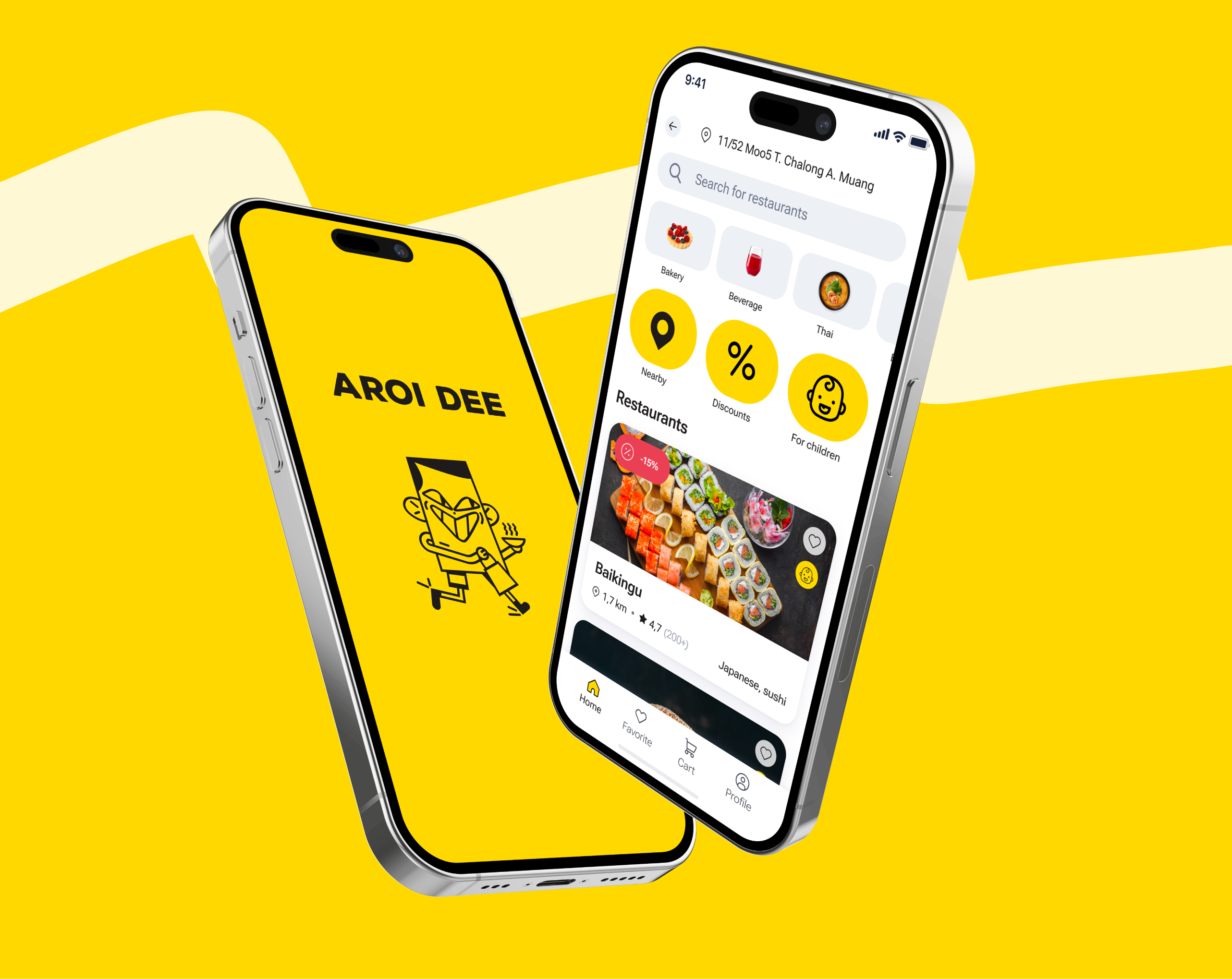
Aroi Dee is a combination of food delivery apps in Phuket. We have created a set of solutions that work across different platforms for customers, restaurants and couriers. These platforms allow users to order food, track delivery in real time, and let restaurants and couriers manage orders through different apps and web panels. The system puts the whole delivery process into one digital cycle and makes sure it works well even when there's a lot of activity.
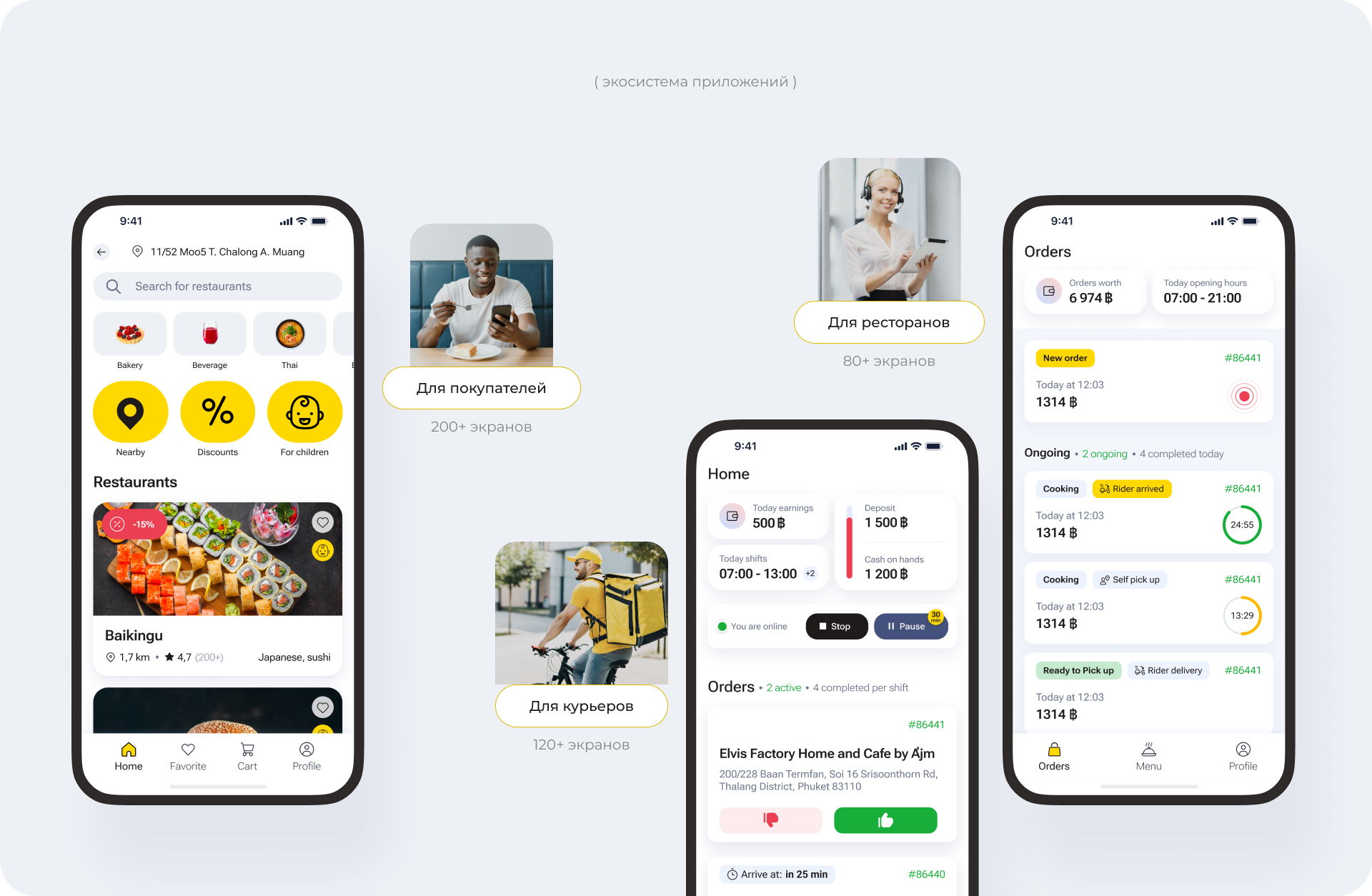

Cafe and restaurant applications automate order acceptance, loyalty programs, table reservations, kitchen and warehouse management.
For example, a mobile app for coffee shops lets customers order a drink before they get there, collect points and get personalised offers. It works with POS systems, kitchen screens and analytics systems, which is useful for restaurants. This means that the owner can see in real time what is for sale and what is stale.
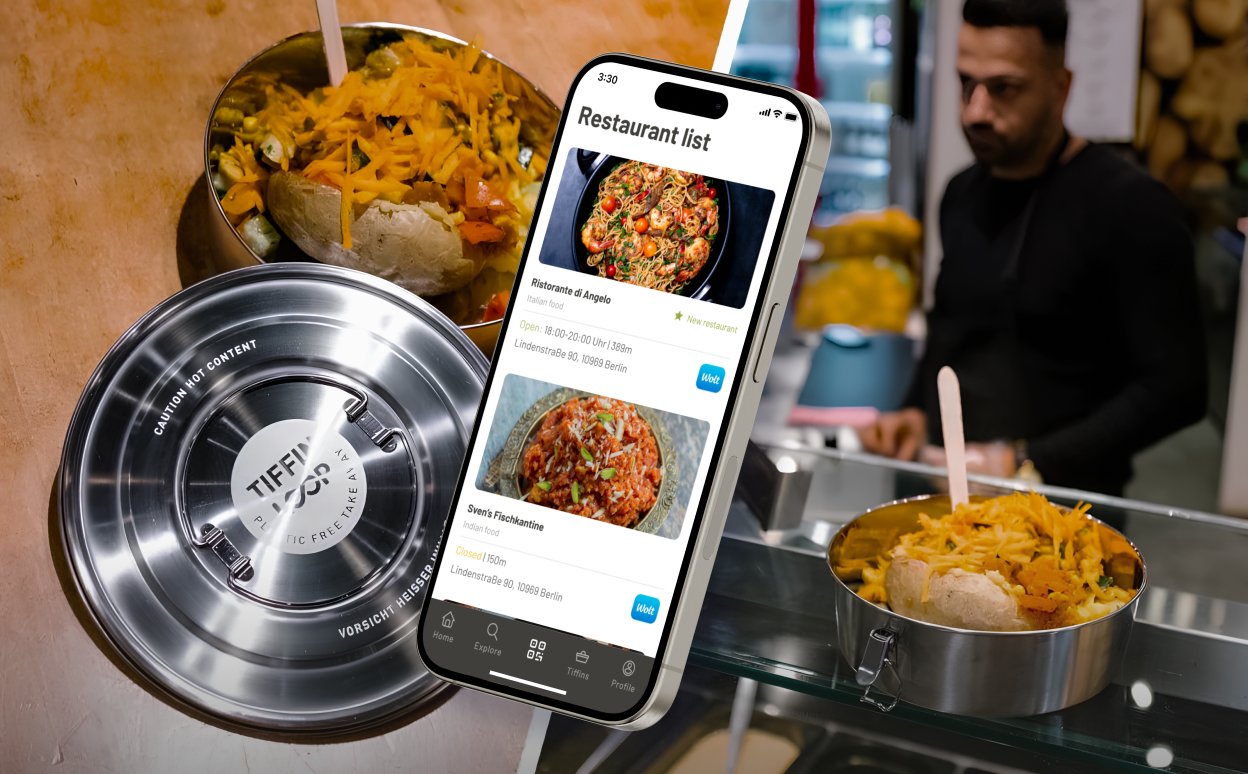
Tiffin Loop is a company that brings together different reusable tableware rental services for restaurants. The project started when Germany's laws about single-use plastic changed. This meant that restaurants and people using them could work together in a «loop» system.
We have developed a mobile application and infrastructure that allows:
The cost of development depends on the functions, how complex the system is, and the level of integrations. This can range from a basic MVP to a full ecosystem with multiple user roles, analytics, and external services.
Planning
First, we need to know who the audience is, what they need to do, and what technology client want to use.
Interface Design
Development
The main part takes 3-4 months. We're building a mobile app and a website, and connecting payment systems, delivery services, loyalty programs and other features.
Testing
Release and support
After launch, the team monitors the operation of the platform and promptly fixes errors.
The AI market in food and beverages is growing rapidly, with an average annual growth rate of 38.8% projected through 2035. Artificial intelligence-based technologies are used in product sorting, quality control, automation of production and packaging.
Personalization and neural networks are also important, especially when working with a young audience. Millennials and zoomers are willing to experiment with brands and tastes, so companies use AI to analyze behavior on social networks and create taste profiles for a specific user.
In 2023, Coca-Cola released a special new drink called Y3000 Zero Sugar. The recipe for this drink was created using a combination of human expertise and artificial intelligence (AI). The idea was to come up with a taste that people would imagine as being the norm for the future.
AI sensors can sort products faster and more accurately than people can, based on size, colour, maturity and whether they are contaminated. In January 2024, Tomra Solutions introduced two AI-based calibration solutions.
Another area is customer interaction: AI operators can accept orders, answer questions and make recommendations, freeing up employees and reducing waiting times.
An AI operator for the food industry is a chatbot that works automatically on a restaurant's website, app, or messenger. It can handle up to 80% of the things customers ask for, like ordering food. We did something similar for a big logistics company (NDA), where we automated transportation calculations.
First, you need to determine the target audience, startup functionality, technology stack, and budget.
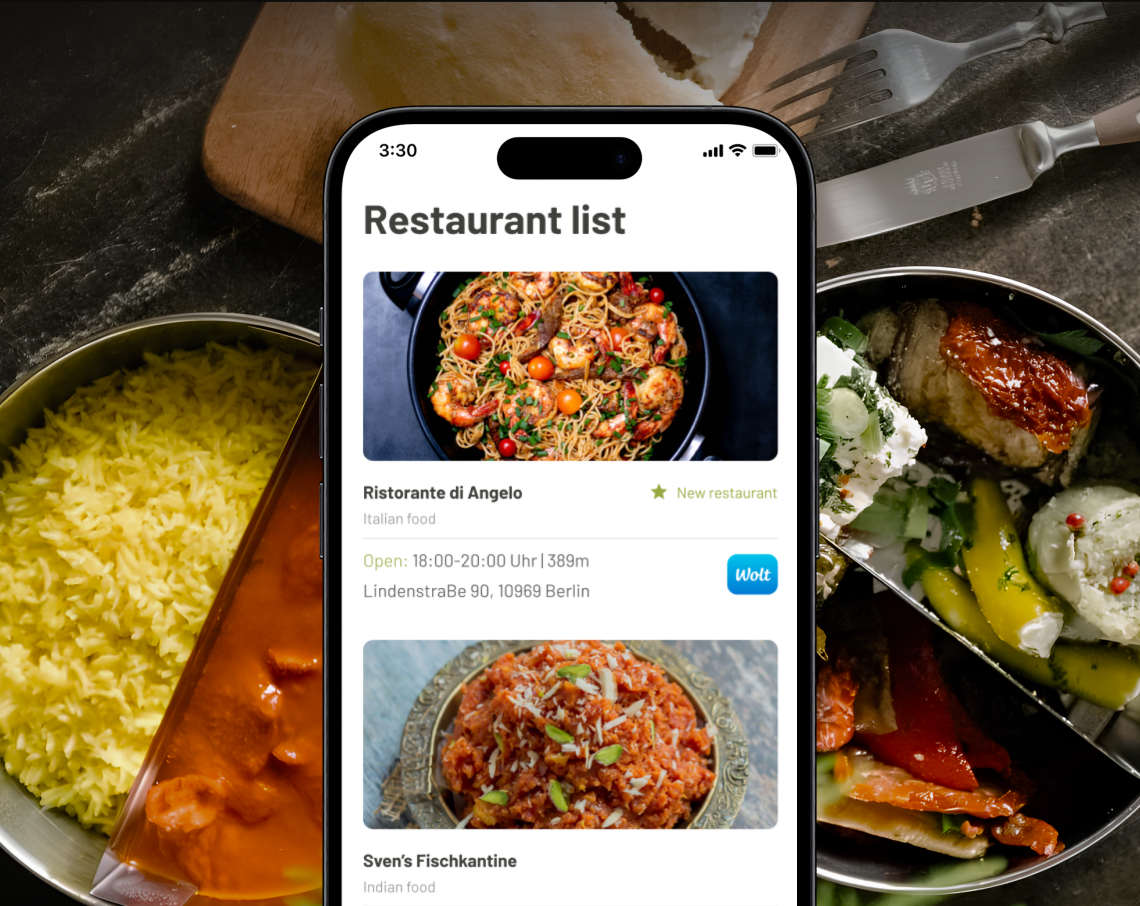
We ensured revenue growth for Tiffin Loop and contributed to environmental protection!
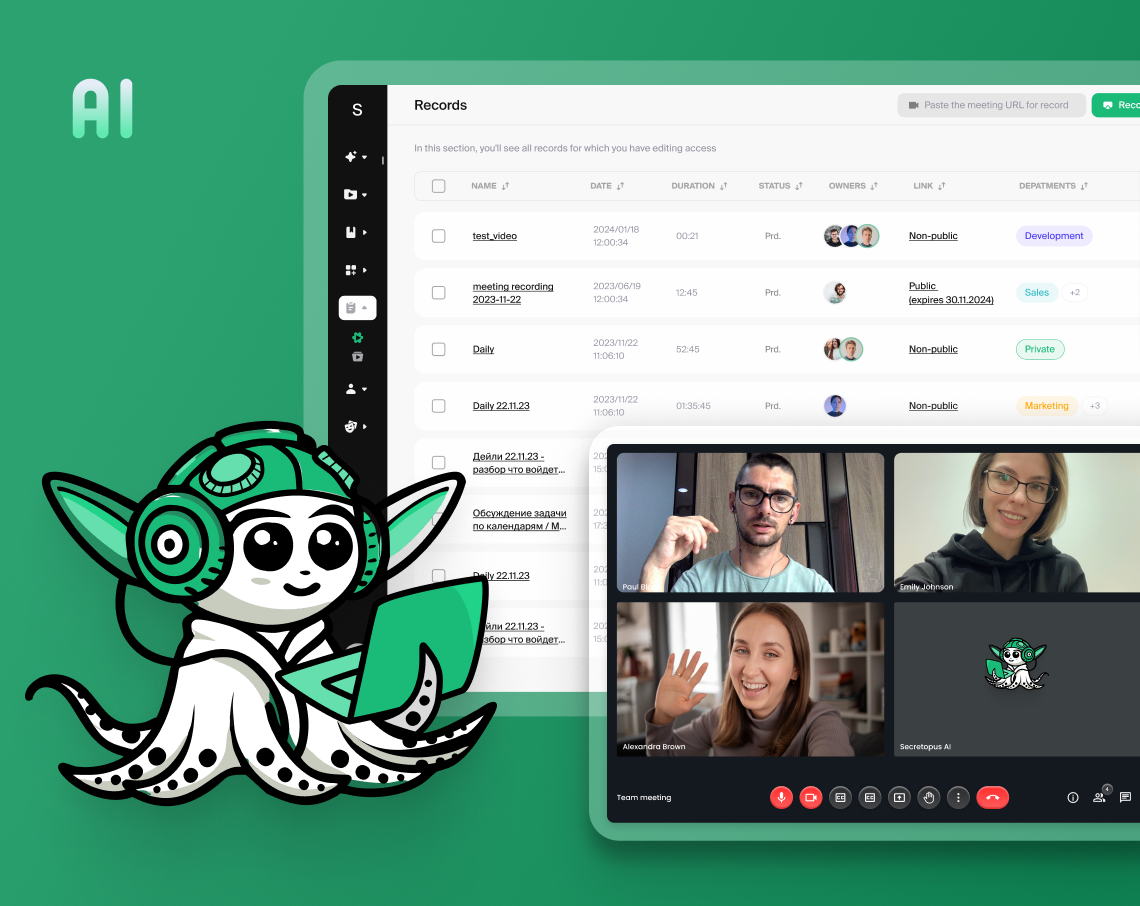
An AI agent for automatic meeting recording, sammarisation and corporate knowledge management.

Harmony and balance: a tracker of women's health and well-being