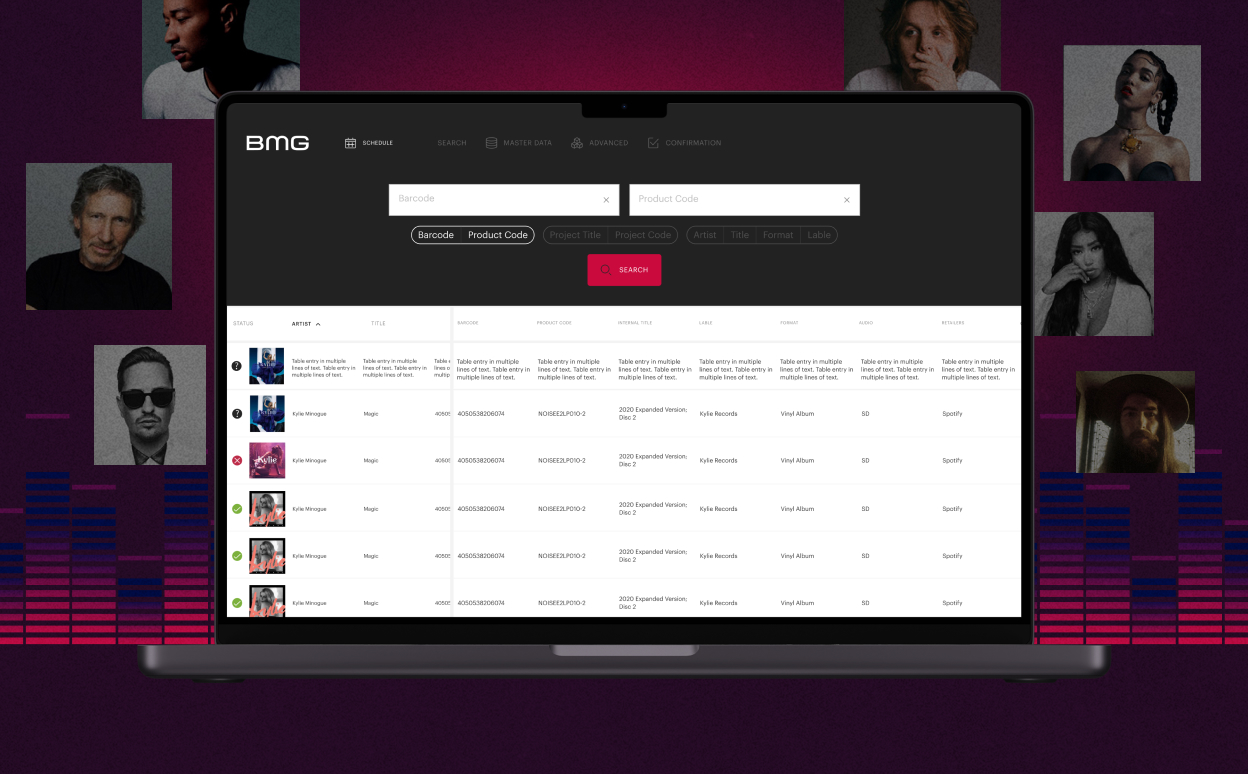
BMG, which specializes in sound recording, music publishing, and streaming services, has an IT ecosystem that supports the work processes of departments in different countries.
Some of the company's IT products, written on outdated technologies, were difficult to maintain and develop. So, the frontend of one of the applications called BMG Release was written in "AngularJS 1.6".
The inconvenience of using the "Search Engine" section expressed in:
Using the "Artist's Page" was complicated:
There was a need to migrate to the modern version of Angular and update the design of the music application.
Migrate the music application of the record company from AngularJS 1.6 to the modern Angular version with minimal changes on the backend.
To improve the user experience, it was necessary:
The LightTech team has completed a seamless transition to the Angular 2+ platform and updated the design of the music application with a focus on improving the user-friendliness of the interface.
Stage 1
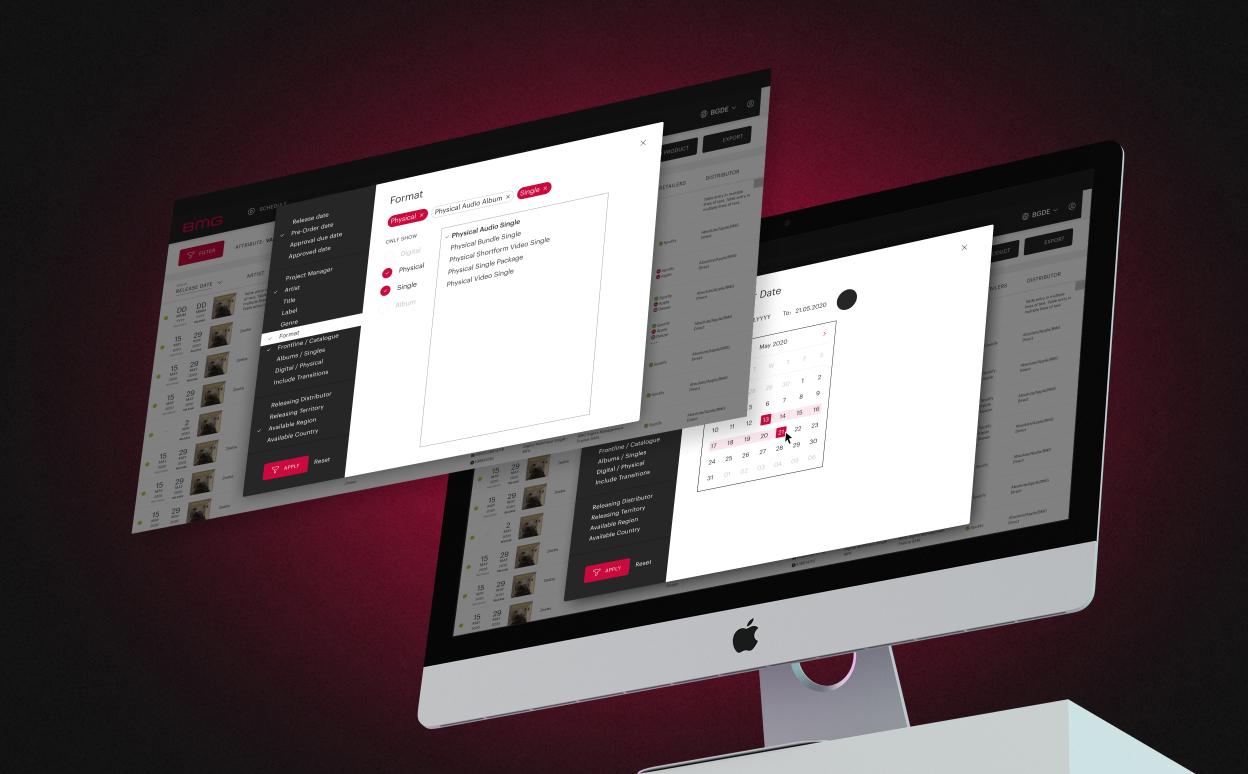
We conducted a series of workshops with users of the current application to identify the main problems and update business processes.
Stage 2
Based on the interaction of the UI/UX designer with the development department, we implemented design concepts aimed at solving application performance problems, improving user experience, etc.
Stage 3

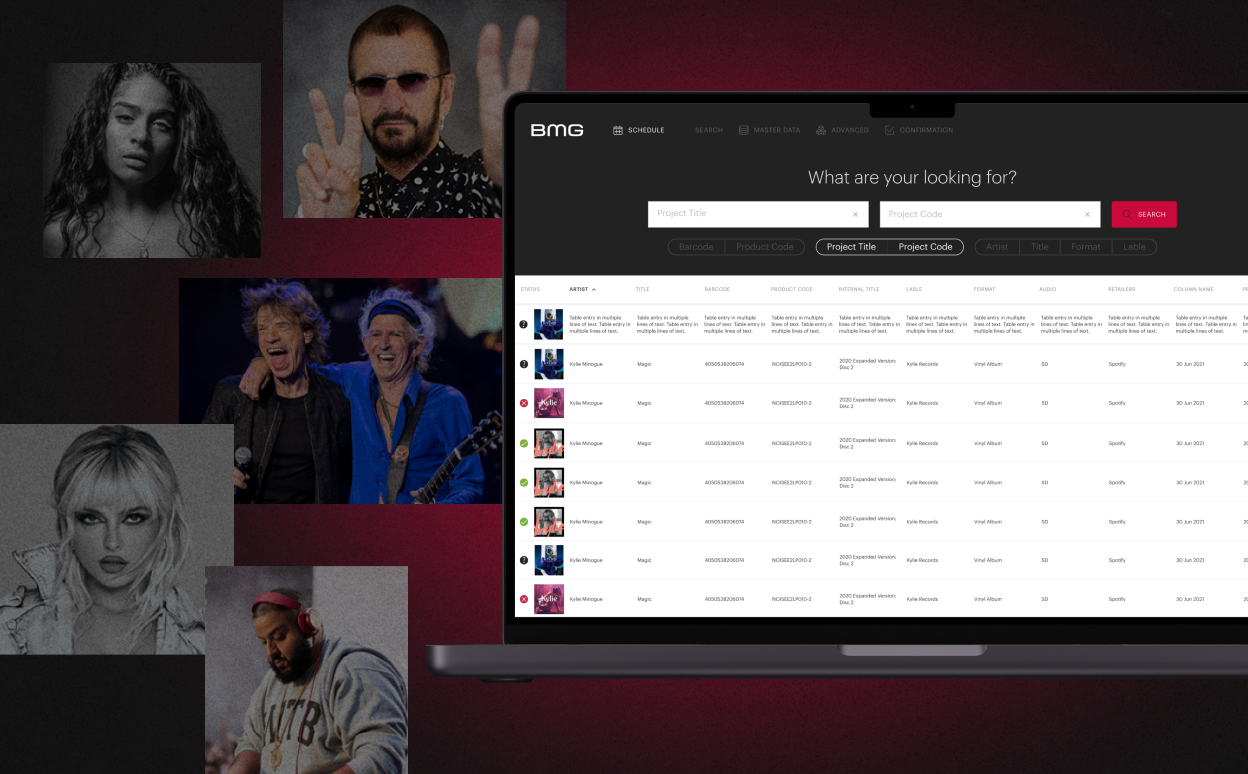
Search Service
Music Artist's page

For users of the web service, it was necessary to ensure uninterrupted operation both on the pages of the new application developed on Angular 2+ and on those pages that still remain on the outdated version of AngularJS.
This required synchronization of sessions and saving user data when switching between two versions of the application.
It was also important to maintain the consistency of the visual design of common elements such as navigation bars and menus, despite the differences in frameworks.
An important aspect of the implementation was the support of the existing access rights system in the application without any changes.
The model of seamless transition of a music application from an old software version to a new one can be successfully implemented by digital content producers in order to improve the user interface and user experience.