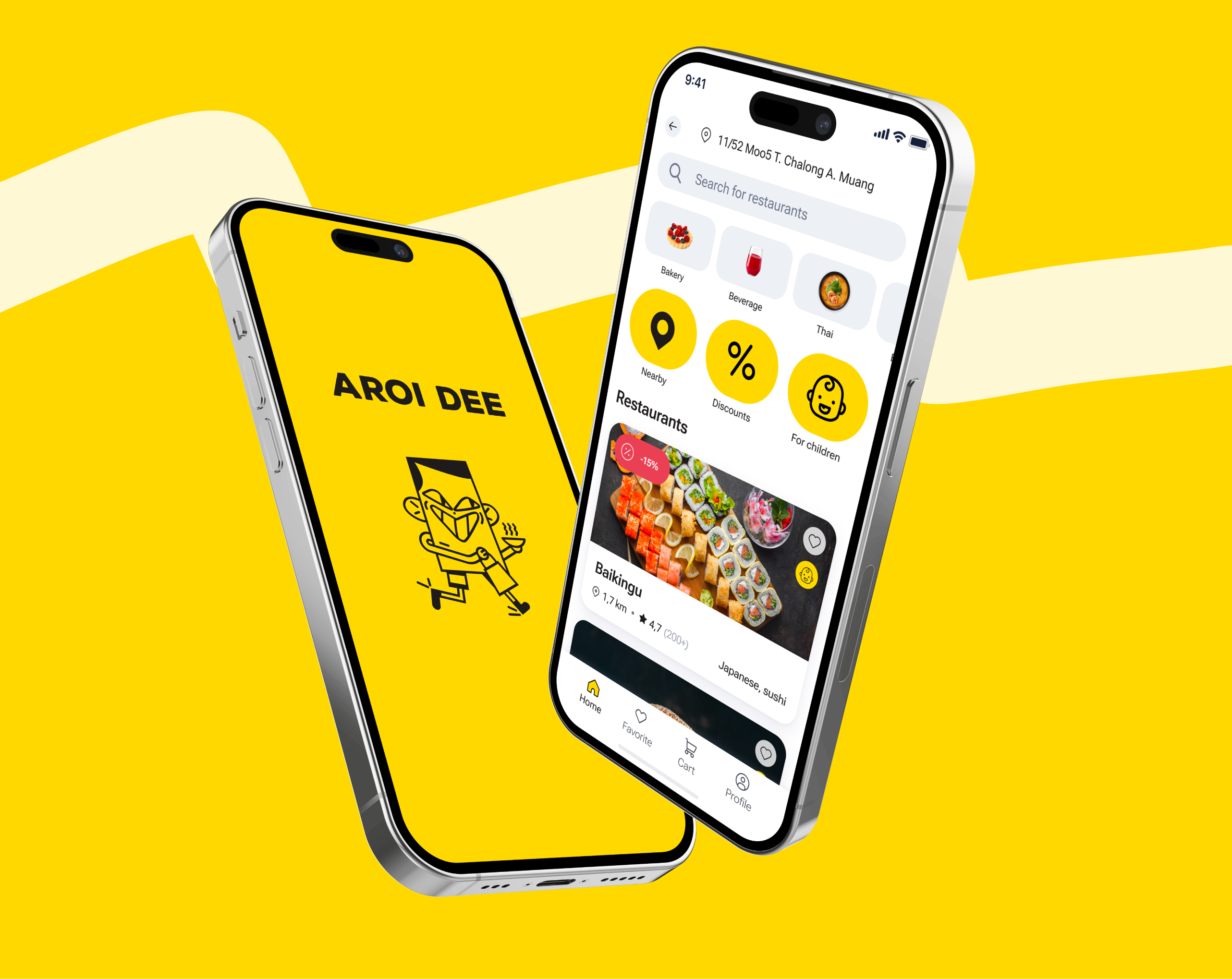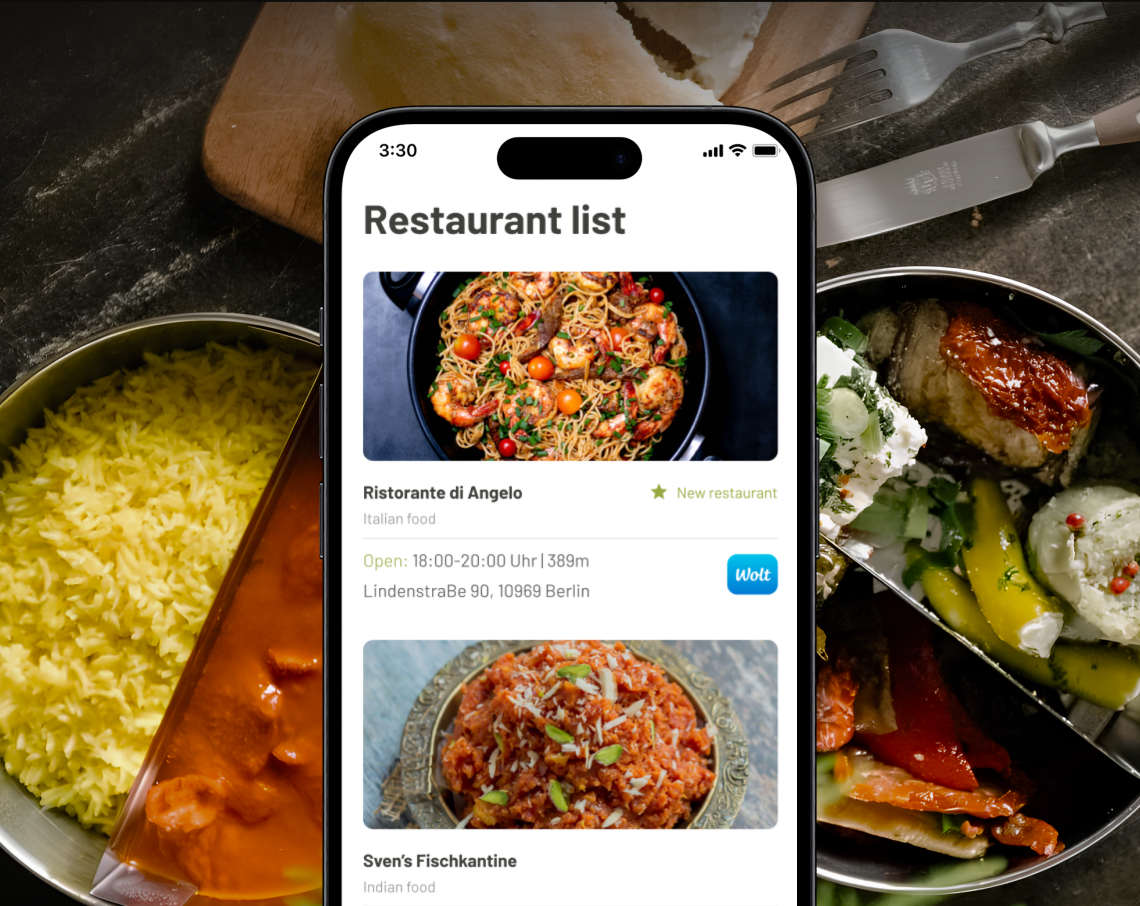

The mobile app market continues to grow rapidly in 2026. According to Appfigures, the number of new programs on Google Play and the App Store increased by 60% in the first quarter.
Instead of people using mobile services less because of AI, the opposite has happened. AI has made it easier to create applications and launch new digital products.
For businesses, a mobile product is a tool for sales, service, analytics, and audience retention.
In this article, we will look at how things are going in the mobile development market, which technologies and approaches are becoming key in 2026, and what needs to be considered when creating iOS and Android applications.
By the end of 2025, the global mobile app market exceeded 112.1 billion downloads, and the smartphone audience reached 5.8 billion users.
At the same time, more people were getting involved: the average number of installed programs went up by 10%, and the time spent using these programs went up by 7%. This shows that mobile phones are still the most important way for people to connect online.
The main insights:

The optimal strategy is to be present on both platforms.
Launching only on Android is justified if the product is aimed at a mass audience and at the same time the budget for the launch is limited.
It is a good idea to develop for iOS only for certain types of products: fintech services, luxury online shopping, business-to-business software as a service solutions, and other areas where customers spend a lot of money.
Mobile apps are a normal part of life for people who use smartphones. People use them to talk to each other, order things, call taxis and get the news. It's no surprise that business owners are putting more money into their own platforms to make it as easy as possible for customers to get their products.
Applications simplify the buyer's journey, automate the company's internal processes, and allow users to provide only the information they need to make a purchase decision.
For example, the time when online shopping was really popular. You could find millions of products with just a few clicks, and often at prices that were lower than in shops. And the products could be delivered to remote areas too.
More people now go online using their phones than computers. In fact, the number of people using their phones has already overtaken the number of people using desktops. According to Statista, forecasts show that by 2027, the number of smartphone users will reach almost 7.7 billion people.
For a business, this means one thing: the audience is already there, and the only question is how easily they can interact with your product.

The business gets direct, personal and permanent access to its audience: through push notifications with exclusive offers, through a simplified way to purchase without re-authorization, through loyalty programs available only to users of the program.
|
Mobile Development Tasks |
Advantages |
|
Constant contact with the audience |
Push notifications ensure regular communication without additional advertising costs. |
|
A simplified way to purchase |
Saved user data reduces the number of steps before ordering |
|
Increasing loyalty |
Personal promotions and special offers for system users only |
|
Optimization of internal processes |
Manage products, schedules, price tags, and acceptance without wasting time. |
|
Collecting analytics |
Demographic data, behavior within the platform, popular positions are the basis for marketing |
|
Reputation and recognition |
The product launch itself becomes an information guide for promotion in other channels. |
A mobile app is software that works on smartphones and tablets using a certain operating system. You can get it from the App Store and Google Play stores, or you can install it directly on your device.
Each product is built on a specific technology stack. The choice of development approach is determined by the target audience, budget, functional requirements, and launch dates.
|
Type of development |
Description |
|
Native development |
Stack: Swift (iOS), Kotlin (Android). Separate products for each platform. Maximum performance and full access to device functions, but higher cost due to dual development. |
|
Cross-platform development |
Stack: Flutter, React Native. A single code for iOS and Android. It allows you to launch a product faster and reduce your budget by 30-40% while maintaining a good UX. |
|
Hybrid Applications |
Stack: HTML, CSS, JavaScript + Cordova / Ionic. A web application inside a shell. Fast and inexpensive development, but lower performance and limited integration with the device. |
|
PWA (Progressive Web App) |
Stack: Web (HTML/CSS/JS). A web application that works like a mobile one: it is installed on the screen, supports offline and push notifications. It does not require publication in stores, but it has limitations on functions, especially on iOS. |
|
No-code / Low-code |
Stack: Bubble, Glide, FlutterFlow. Tools for rapid prototyping and MVP. They are suitable for hypothesis testing, but not for complex and highly loaded products due to scaling and customization limitations. |
Users expect the product to adapt to them: anticipate requests, make relevant recommendations, and respond instantly.
AI and machine learning are used in every part of the application, from the user interface to how it is developed. At the product level, these are personalized recommendations, predictive search, chatbots and voice assistants, automatic translation and speech recognition. Connecting LLM models via APIs (OpenAI, Anthropic, YandexGPT) allows you to embed intelligent functions without building your own ML infrastructure from scratch.
AR and VR open up a new level of interaction with content: product fitting, interactive instructions, educational simulations.
Gamification is the introduction of game mechanics into non—game scenarios: scores, levels, challenges, counters. This is one of the most affordable ways to increase audience engagement and retention without drastically changing the core product.
Discovery: 2-4 weeks
Here, the team conducts an in-depth analysis of the market and competitors, interviews with potential users, forms requirements and prioritizes functionality. According to the results of Discovery, a technical specification and an estimate appear. The absence of this stage is the main reason for budget overruns by 40-70%.
UI/UX design
The stage includes creating a clickable prototype (for testing on real users before writing the code).
iOS and Android have fundamentally different design guidelines. Material Design 3 for Android and Human Interface Guidelines for iOS dictate different patterns of navigation, gestures, and components. Users of each platform expect native interface behavior — violating these expectations reduces conversion.
Development
The development is carried out in two-week sprints using the Agile/Scrum methodology. Every two weeks, the client sees the functionality working, which provides control over the process and the ability to adjust the direction without losing the budget. AI tools (GitHub Copilot, Cursor) speed up the writing of template code by 20-35%, but do not replace architectural solutions and code reviews.
QA testing
Android: the main difficulty is fragmentation. More than 24,000 unique device models with different screens, OS versions and firmware manufacturers.
iOS: fragmentation is minimal — Apple controls the entire hardware fleet. The minimum supported version of iOS is 16 (~95% audience reach).
Release and publication
It takes 1-3 days to publish in the App Store on the first check (repeated updates are faster). Apple's moderation is stricter than on Google Play: an app may be rejected for violating the Human Interface Guidelines or not providing a detailed description of the functionality when requesting permissions. Google Play checks for 3-7 days.
The price of a mobile app depends on the complexity of the project, the number of screens, integrations, user roles, and the required workload. The cost is also affected by the chosen technology: native development can be more expensive due to the creation of separate systems for iOS and Android, and the cross-platform approach reduces the budget.
Creating an MVP (Minimum Viable Product) is the launch of the first working version of a product with basic functionality to test a hypothesis and receive feedback from users. This way, you can accelerate market entry, test demand without large investments, and further develop the product based on the data obtained.

App Store Optimization for mobile products is the same as SEO for a website. Basic checklist:
A release is not the end of a project, but its beginning. The budget for mobile app support is 15-20% of the initial cost of development annually. This money is spent on adapting to new versions of iOS and Android (Apple and Google release major OS updates every fall), minor improvements and server infrastructure.
Companies that have saved on support are faced with the fact that their application stops working correctly after the next OS update.
One of the key trends is the integration of artificial intelligence into mobile applications: data processing and AI work directly on a smartphone without transferring information to the cloud. Apple Intelligence and local Android AI models allow you to implement smart search, personal recommendations, automatic filling and document analysis with a high level of privacy.
Another trend is IoT applications for working with smart devices, sensors and telemetry. Through a smartphone, users control vehicles, equipment, security systems, warehouse equipment, and industrial facilities in real time.
The cost of creating a mobile app depends on the complexity of the project, functionality, design, and platforms (iOS, Android, or both). Cross-platform approach reduces time and budget due to a single codebase
Yes, a mobile app is a tool for business growth. It attracts customers, increases sales, automates processes, and improves service.