

After any discussion, there comes a moment that no one likes — you need to summarize, draw up a protocol, send out instructions and identify those responsible.
In practice, this part is often postponed for later, and valuable ideas are simply lost. Therefore, more and more companies are looking for ways to automate the recording of results and preserve the knowledge generated at meetings.
Today, systems are used for this purpose that automatically decode speech and turn audio into text. Simply put, these are artificial intelligence-based tools that capture the course of a discussion, highlight key thoughts, and form structured outcomes.
Teams get the opportunity to focus on making decisions rather than manually taking notes.
Not every meeting requires strict registration.
Notes are most often used for short daily syncs and quick discussions lasting up to about 30 minutes. With this mini-version of the meeting result, participants will be able to quickly navigate key topics, capture ideas and agreements without unnecessary formality.
Protocols, on the contrary, are used for important meetings where decisions have legal or strategic significance, such as meetings of the entire team, management meetings, or with external partners. The protocol records decisions in strict form, specifies those responsible, deadlines for execution and includes all necessary details.
Platforms for transcribing audio into text solve several basic business tasks at once:
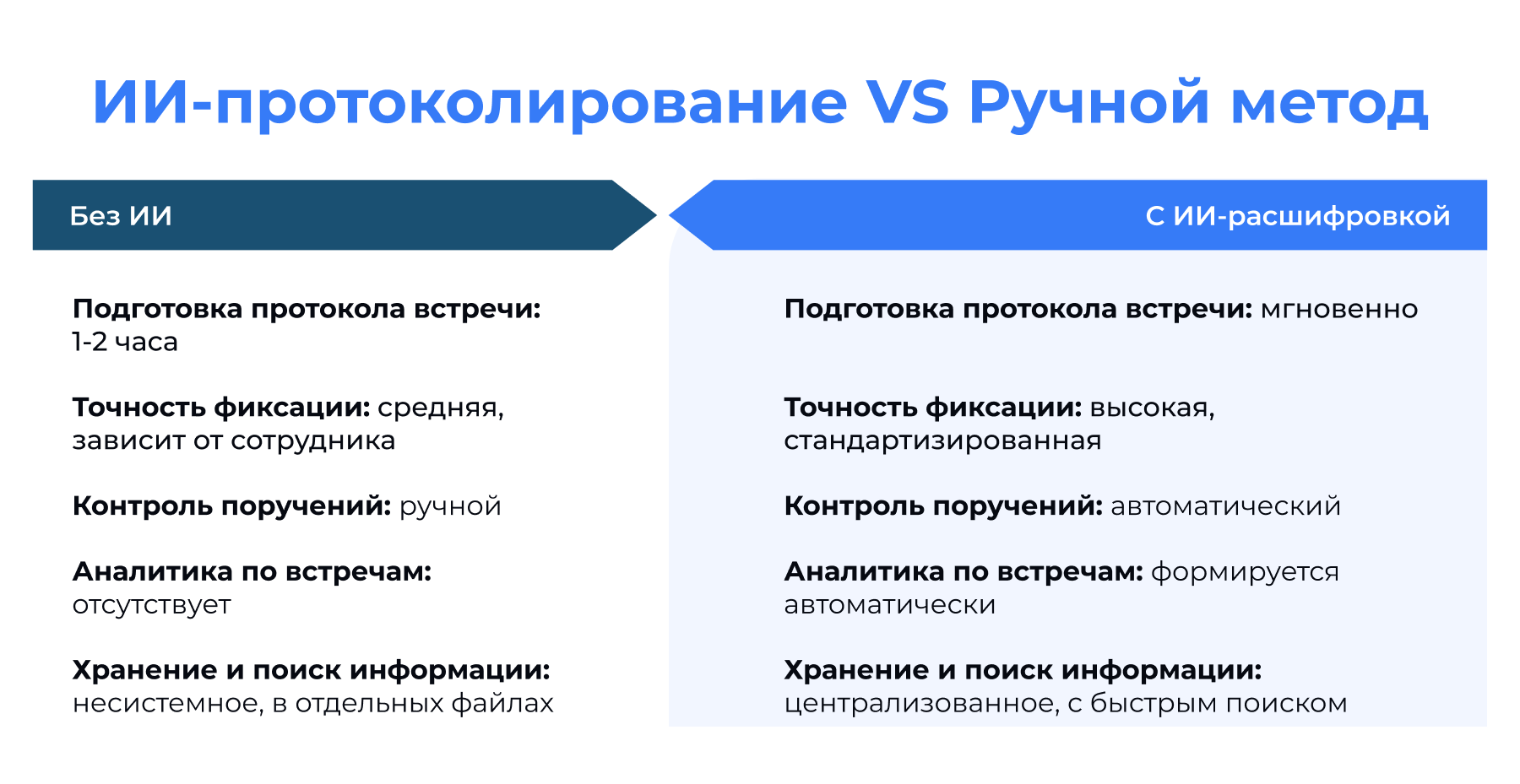
1. Automation of the meeting protocol. The system generates sammari in real time, eliminating the need for manual input and speeding up document flow.
2. Uniformity and accuracy of records. The algorithm eliminates errors and distortions typical of manual retelling, providing reliable and standardized data.
3. Optimizing the team's time. Reports and summaries are prepared automatically, freeing employees from routine work.
4. Task completion control. The platform records orders, deadlines, and those responsible.
The system can integrate with corporate messengers and CRM, generating reports on projects and personal tasks. This way you can reduce the workload on employees and remove the routine.
Below we have given an example that clearly shows how the introduction of AI for meeting logging increases the efficiency of business meetings and reduces labor costs.
Today, there are many AI platforms on the market that help companies automate meeting logging and business communications processing. Among the well-known international solutions are Fireflies.ai , Otter.ai , MeetGeek. They effectively handle speech decoding and note-taking, and are mainly targeted at the English-speaking market.
LighTopic is an AI system for logging meetings and building a knowledge base. Our platform automatically turns conversations and discussions into structured documents. It recognizes speech, captures decisions, identifies tasks and those responsible, forming a protocol of meetings in real time.
The main difference between LighTopic is adaptability. The system is trained on the company's internal terminology, takes into account the communication style and protocol templates. Therefore, the final documents look natural and comply with corporate standards.
The platform integrates with Jira, Confluence, Trello, and other enterprise tools to automatically transfer tasks and data to familiar workflows.
Automating meeting logging with AI saves businesses time — they no longer need to manually decrypt records and prepare reports. The system captures everything that happens at the meeting, creating a complete picture of the discussion without omissions and distortions.
Artificial intelligence provides objectivity by conveying the conversation as it was, and allows you to quickly find the information you need by searching for keywords, topics, or even meanings, as in LighTopic.
AI audio decoding solutions integrate with corporate systems — tasks are automatically transferred to CRM or task trackers. Process and project management becomes easier. For example, such systems are already widely used for internal meetings, sales, customer negotiations, and staff training.
Not obligatory. It is better to connect automatic protocols where important decisions, tasks and ideas that need to be saved are discussed. For short daily calls, you can make do with notes. If a meeting generates new agreements or valuable insights, it should be recorded.
It is worth explaining that the system does not "monitor" people, but helps them not to lose information. Decoding is needed not for control, but for efficiency, so as not to look for who said what later and not repeat the same thing. Modern platforms use secure channels and do not store records without the company's consent.
It is best to integrate it into workflows: transfer tasks to CRM, attach totals to LighTeams, Confluence or Trello, mark those responsible. In this way, decisions are not lost, and ideas turn into actions.
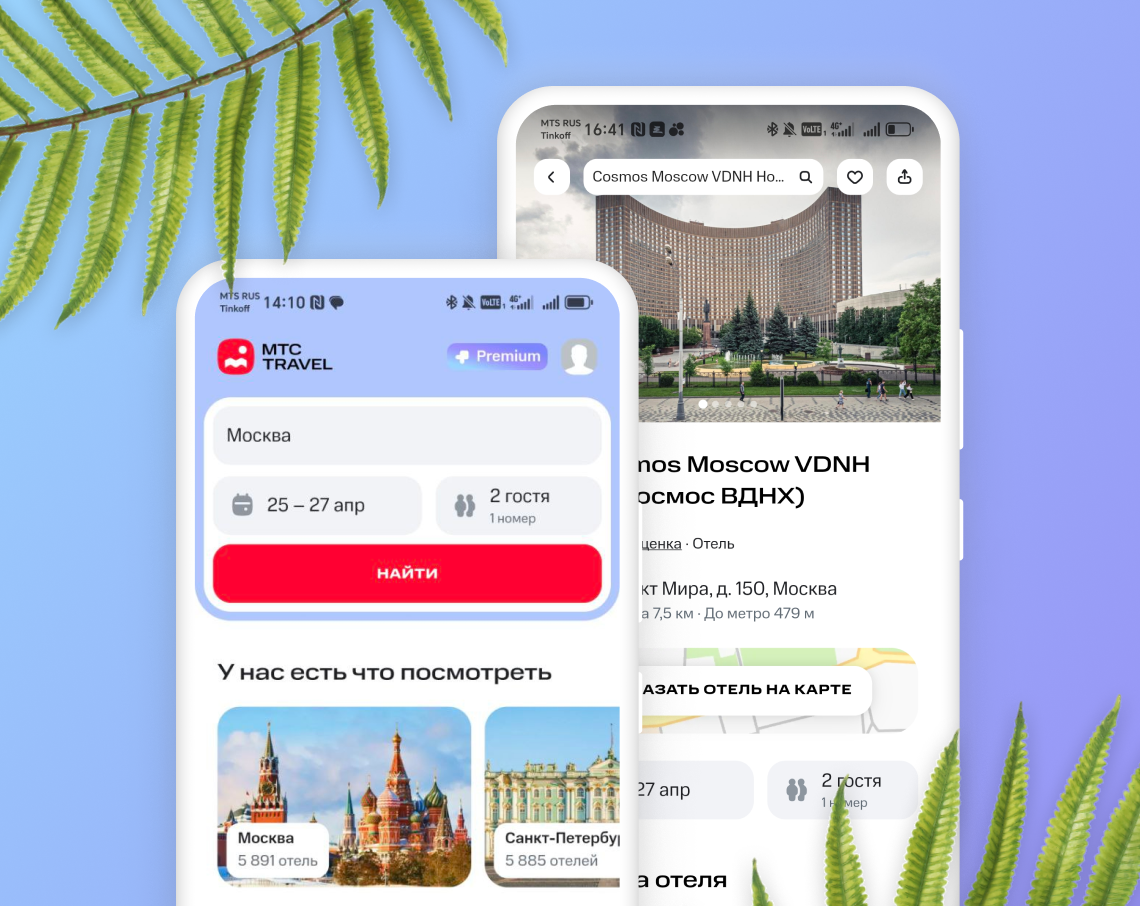
100 тыс.+ пользователей и 3000 часов разработки — Flutter MVP за 3 месяца
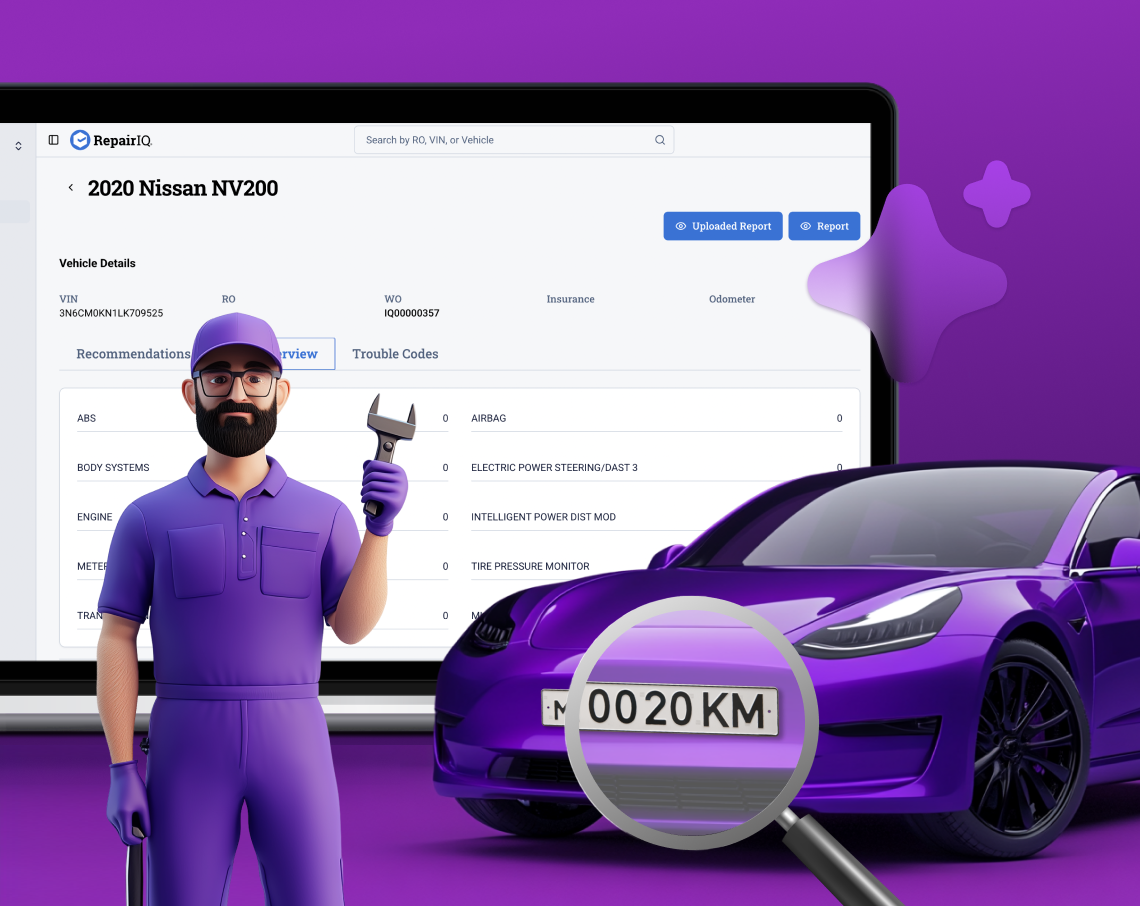
Автодиагностика будущего — облачная платформа с ИИ и LPR
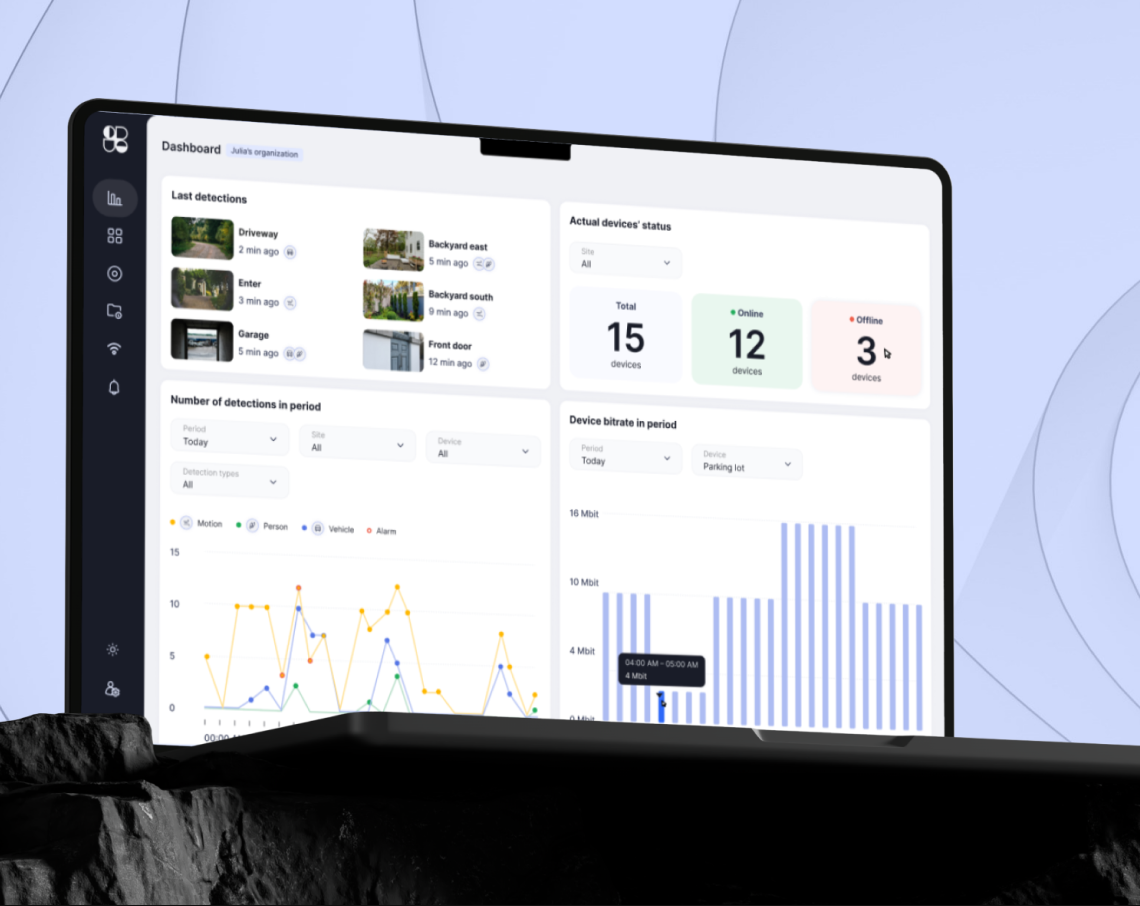
Умное видеонаблюдение — облачная масштабируемая платформа с мобильным доступом и ИИ-аналитикой для бизнеса и госструктур
