
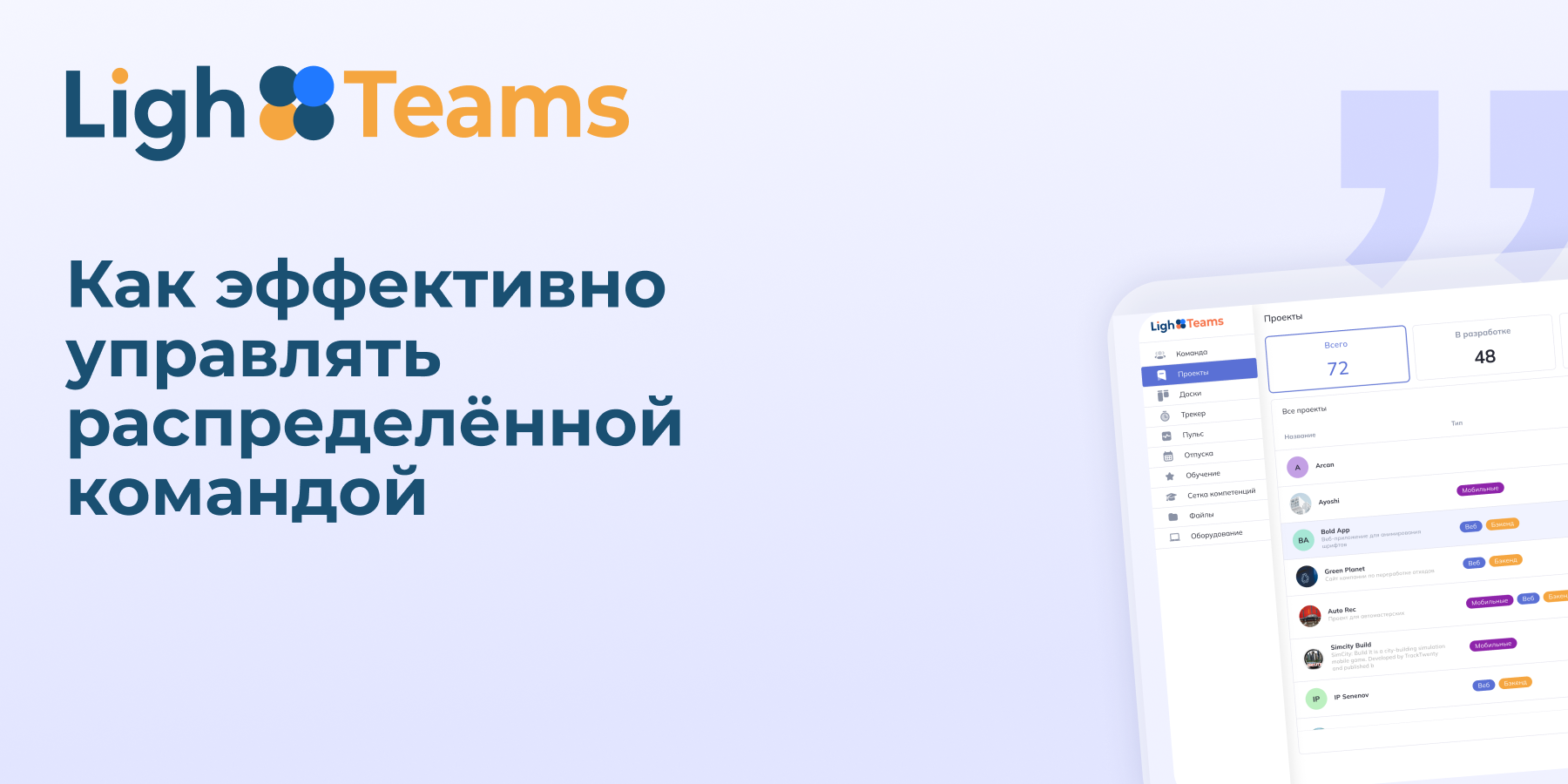
The remote work format has long become a standard in IT and is gradually penetrating into other areas. More and more companies are forming distributed project teams, hiring specialists from different cities and countries. For businesses, this means flexibility, reduced infrastructure costs, and rapid response to external changes compared to the traditional office model.
If you don't get your work processes right, it's easy to lose control. Communication disruptions will begin and motivation will drop. Our team consists of people from more than 10 cities and countries, but the turnover rate is only 5.7%.
In this article, we will share practices that help build an effective distributed team management system.
A distributed team is a group of specialists working remotely. Professionals from different cities and countries are united by common goals and structured processes. They interact both in real time and asynchronously using digital tools, from messengers to task management platforms.
But for this system to really work, tools alone are not enough. It is necessary to reconsider traditional approaches to management: to build processes and make them transparent, to define uniform standards of work. Employees in a distributed project team are united by a technological stack, common corporate principles, and a culture of trust that does not depend on time zone or communication format.
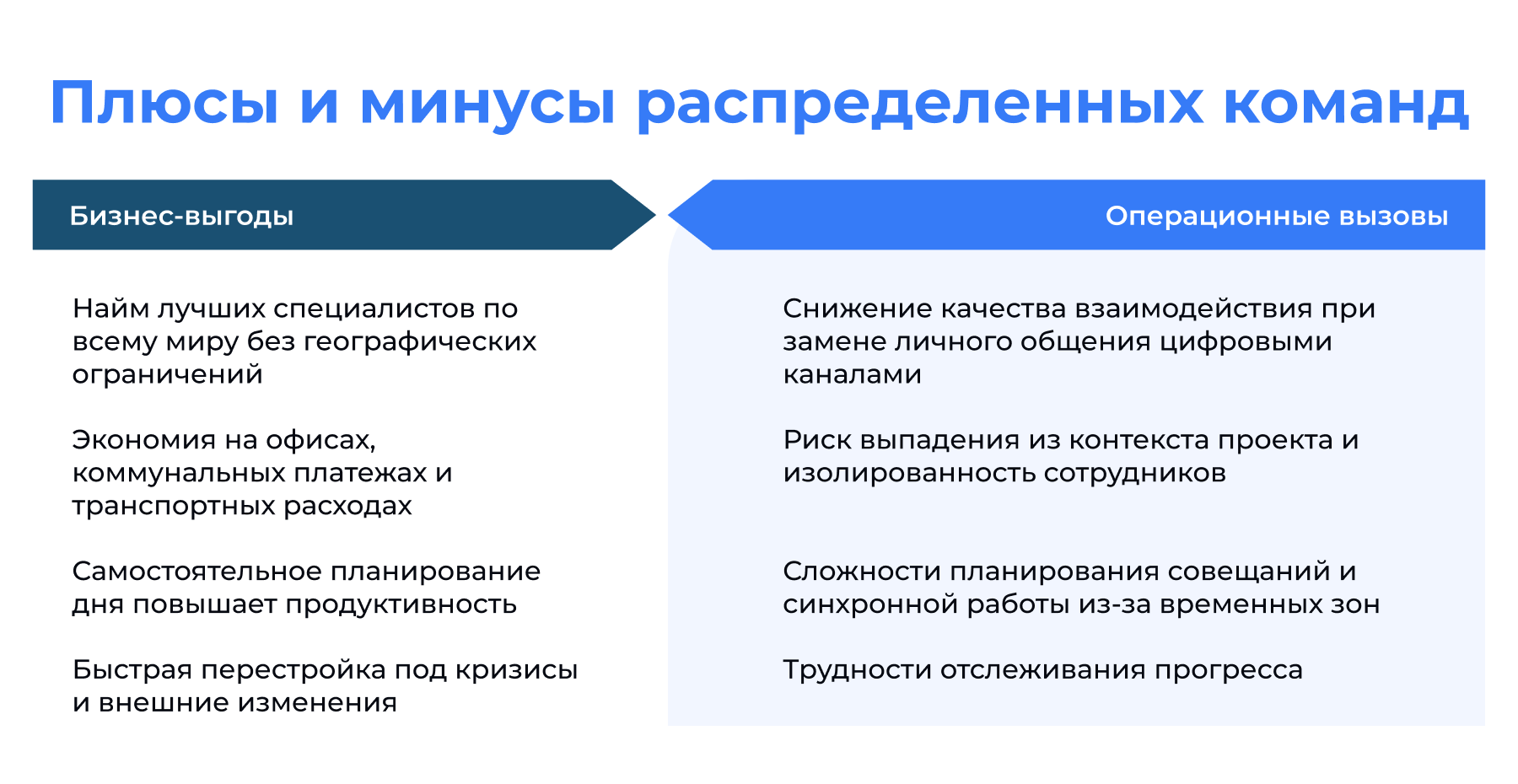
The remote model gives companies access to the global talent market, reduces infrastructure costs, and allows them to attract top talent without territorial restrictions. Along with the advantages, new challenges arise: working in different time zones, the need for asynchronous communication, reduced levels of personal interaction, and increased risks of professional burnout.
We conducted an internal study in which our HR specialist Louise analyzed why employees quit. The conclusion became the basis for building practices to support and prevent burnout, which is important when working in a distributed team.
Practice shows that a distributed team can be not only effective, but also sustainable in the long run. There are several signs by which this can be judged:
Trust is shown in actions. If participants appreciate the format, they remain motivated, recommend the company to their friends, and help fill vacancies through personal recommendations.
Low staff turnover. When employees feel stable, engaged, and see the results of their work, they don't seek to change companies. This reduces hiring costs and makes the team more stable.
The results are independent of geography. The team remains productive, despite the distances and different time zones, thanks to customized processes, clear roles, and effective communication.
Recognition from the management. If managers note the high level of the product and the positive atmosphere, then the team is working and bringing business value.
It may seem that managers have enough worries without that, why else think about the team climate? If you don't take care of the atmosphere in the team, the consequences can be even more serious than in a regular office team.:
People will leave faster. In remote work, people have fewer emotional connections with colleagues, so the decision to leave is easier.
Conflicts are more difficult to resolve. When people don't see each other in person, misunderstandings accumulate faster, and it's more difficult to resolve them via video communication.
Productivity decreases. If the atmosphere is bad, people perceive work simply as a stream of tasks on the board, but do not think about the product and do not offer new ideas.
The success of a distributed project team depends on communication, technology stack, and interaction structure.
|
The Distributed Team Management aspect |
Description |
Examples / Tools |
|
Communication |
Regular, predictable and organized communication within the team |
Telegram channels: a working chat, an update channel, an informal chat with memes and discussions, team quizzes for cohesion. |
|
Technology stack for collaboration |
Tools that support interaction, discussion, and feedback |
Google Meet — video calls, Mattermost / Slack — for communication, Loom — video explanations, Jira, Trello, Asana, LighTeams and others for collaboration. For example, we use LighTeams, a business process automation tool to set tasks and select an artist based on downloads. |
|
The basic structure of interaction |
Established formats and rhythms of teamwork |
Daily or weekly syncs, retrospectives, monthly meeting for the results. |
Remote employees should know how to manage time and strictly adhere to deadlines. Distributed team work requires reliable solutions to coordinate processes, track the status of tasks, and flexibly adjust plans. Scrum, Agile and Kanban methodologies are effectively implemented in an online environment thanks to:
Iterative planning (sprints).
Visual task boards (Kanban boards).
Progress tracking systems and blockers.
Flexible review of priorities in real time.
Masthead functions of a digital solution for managing a distributed team:
Kanban boards and task tracker — for visual planning and control of execution
Integrated time tracker — with analytics on tasks, employees and projects
Flexible roles and access system — setting up rights for different team members
Competence map and training — support for professional growth and identification of development areas
HR modules - vacation planning, tracking of issued equipment, submission and approval of vacation or sick leave applications
Important: monitoring tasks and progress should be based on a balance of trust and objective metrics, rather than micromanagement.
People stay in a distributed team not because of cool tasks or high salaries (this is everywhere), but because of a sense of belonging to the team and recognition of their contribution. Create this atmosphere purposefully, and your team will become productive and happy.
Team collaboration apps help you stay synchronized regardless of geography. They ensure transparency of processes, timely communication, control of tasks and uniform workload of employees, creating a single digital and workspace.
Minimum — task tracker, time tracker, role and access system, HR module and analytics. They simplify control, planning, load management and create conditions for growth without pressure and micromanagement.
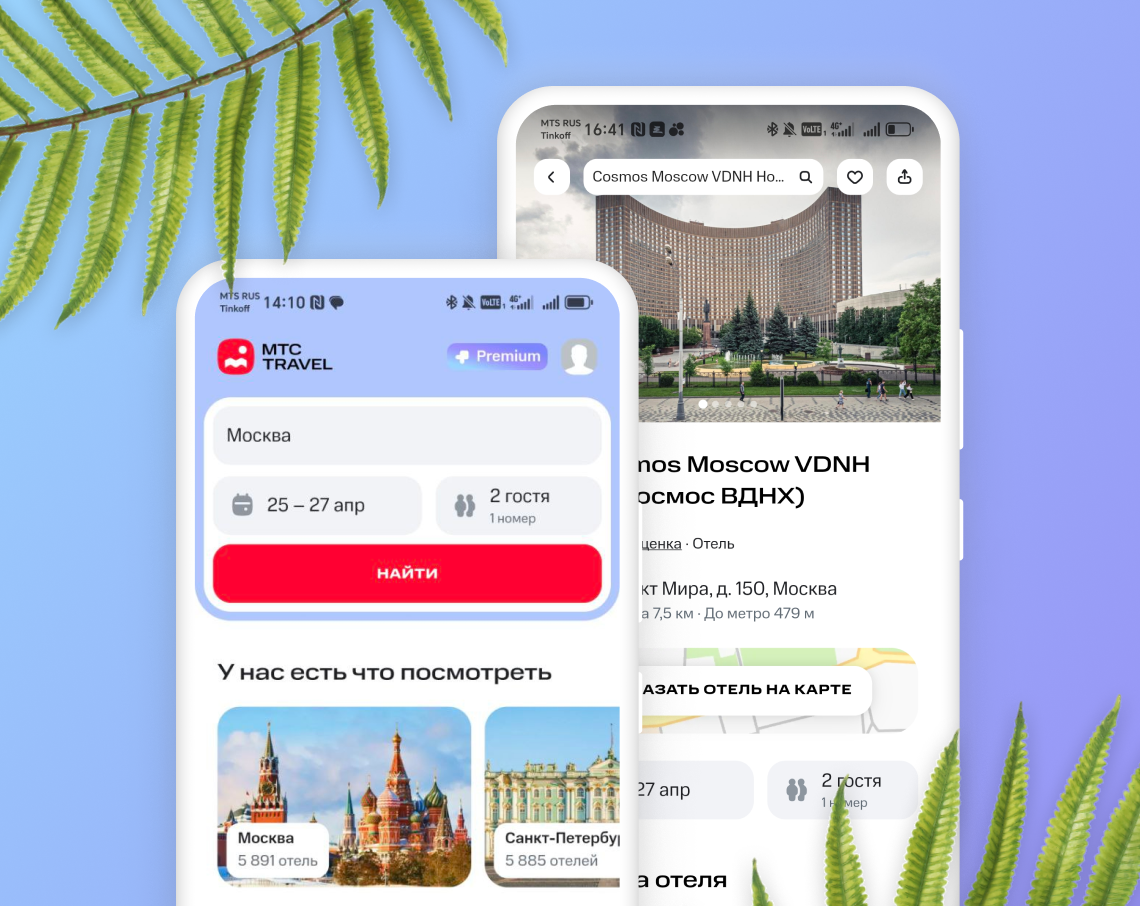
100 тыс.+ пользователей и 3000 часов разработки — Flutter MVP за 3 месяца
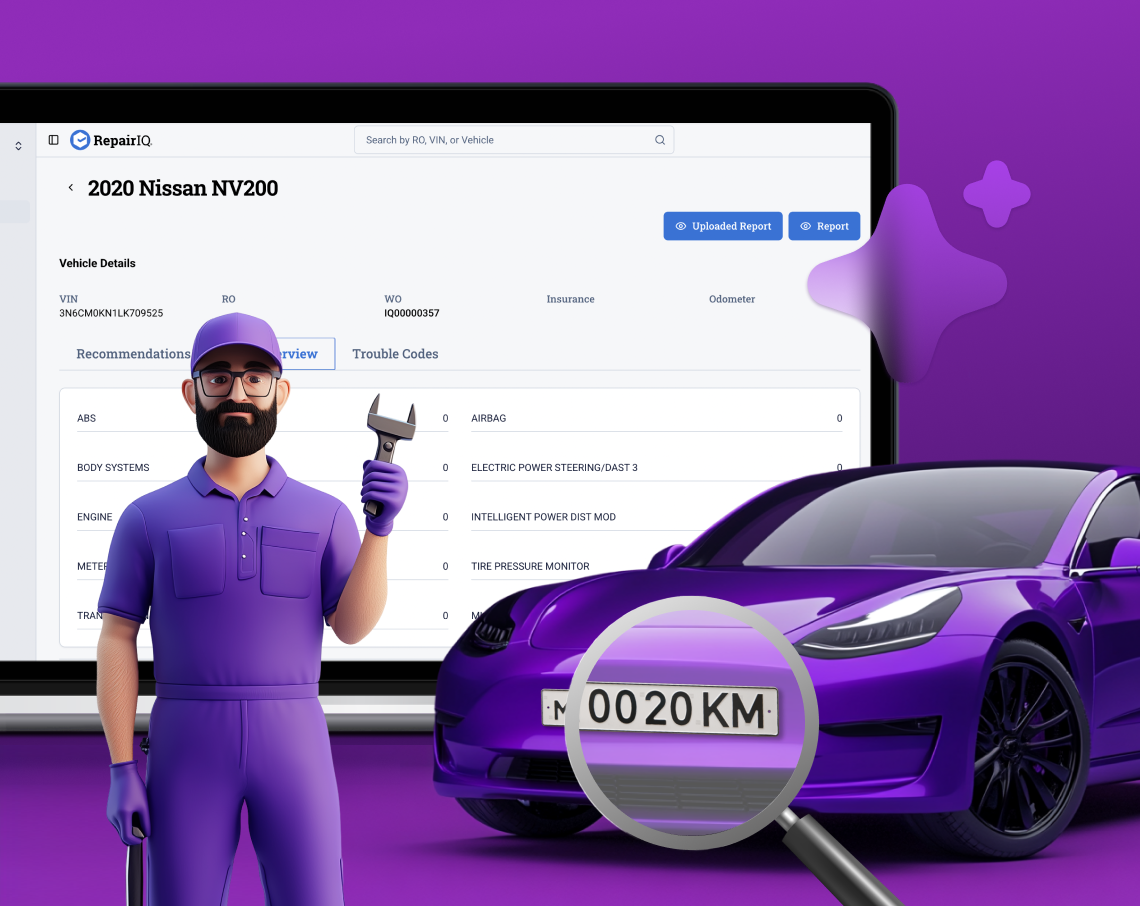
Автодиагностика будущего — облачная платформа с ИИ и LPR
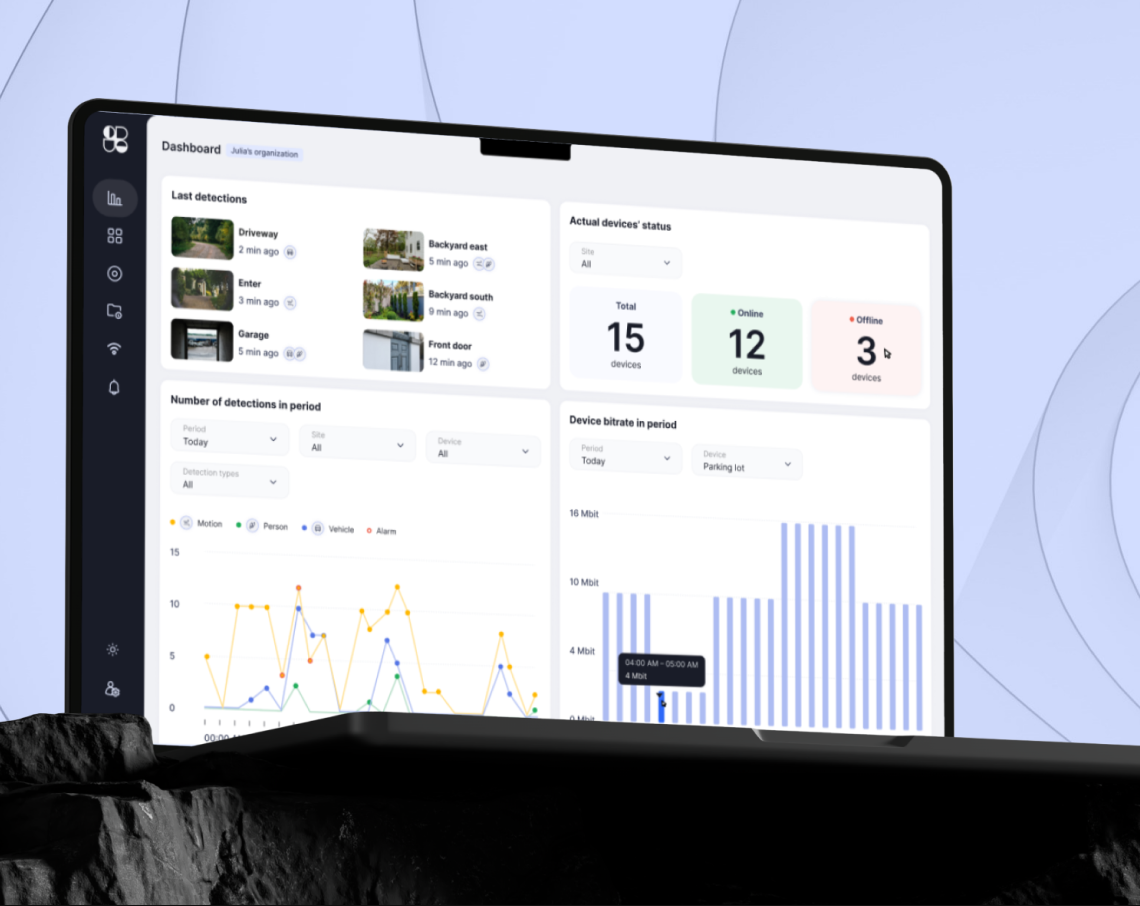
Умное видеонаблюдение — облачная масштабируемая платформа с мобильным доступом и ИИ-аналитикой для бизнеса и госструктур
