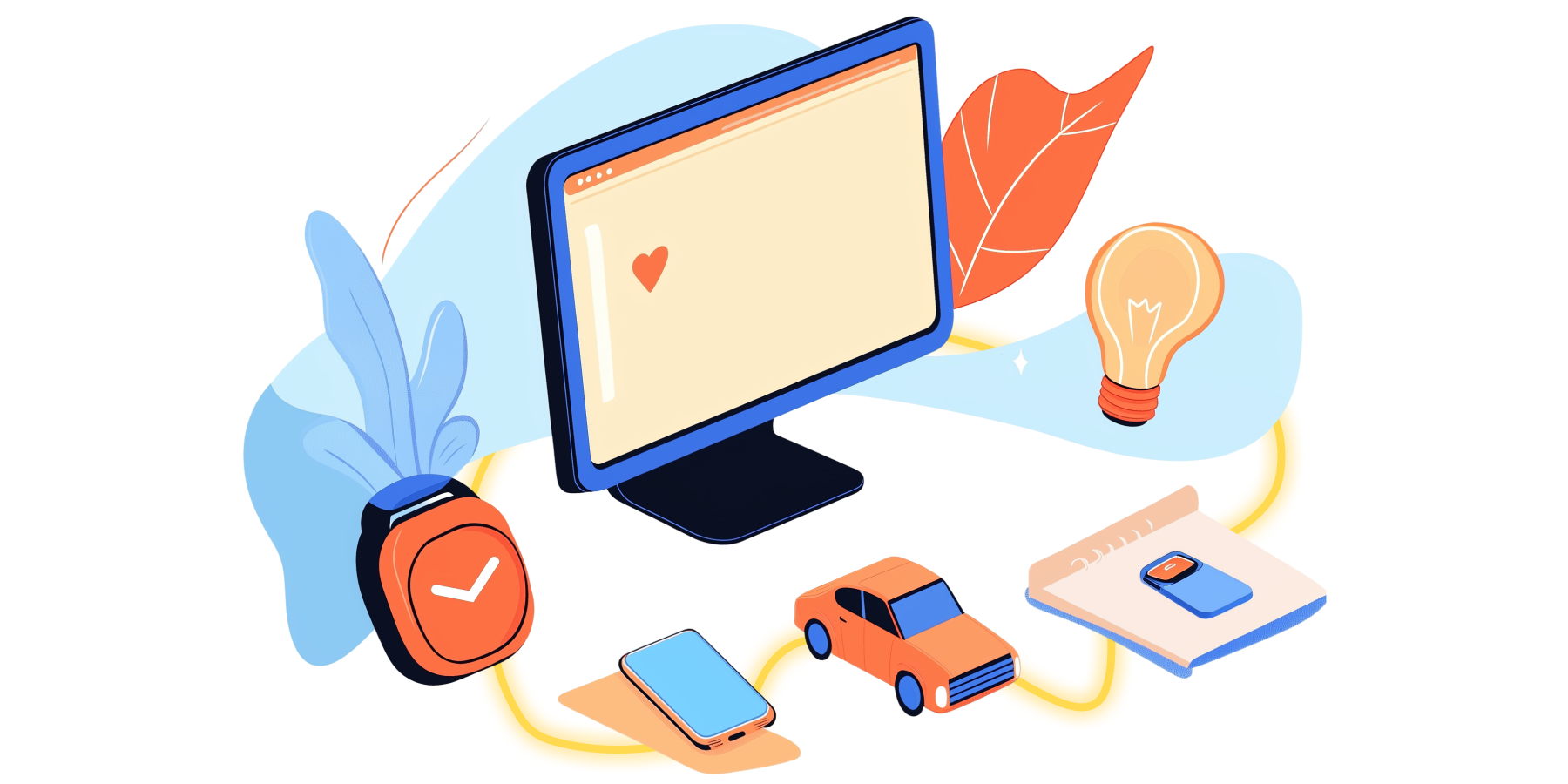
Have you noticed how smart watches themselves offer to relax if you sit for a long time, or how a streaming service adjusts the video quality to your Internet? This is telemetry in action. It runs unnoticed in the background, collects data from devices, sends it to the cloud, and helps services become smarter and more useful to us.
Today, it is used everywhere: from cars and medical equipment to agricultural machinery and industrial installations. With the development of sensors, wireless networks, and clouds, telemetry has ceased to be a highly specialized technology. Now it helps businesses make decisions faster, more accurately, and based on facts rather than guesses.
In this article, we will look at how the telemetry system works and where it is used. We will also show an example of a cloud platform for car diagnostics, where telemetry is one of the main technologies.
Telemetry is a technology for remotely collecting, transmitting, and analyzing data from various devices or objects. Such data can come from sensors, software, machines, medical devices, and other sources. The main thing is that information is transmitted automatically, without human intervention, and often in real time.
The classic telemetry system consists of several components:
The data source can be a sensor, a controller, a mobile device, or an application.;
Means of transmission — wired or wireless channel: from Wi-Fi and LTE to satellite communications;
Receiver (server side) — a system that collects, processes and stores data;
Analytics and visualizations are interfaces and algorithms that turn "raw" data into useful information.
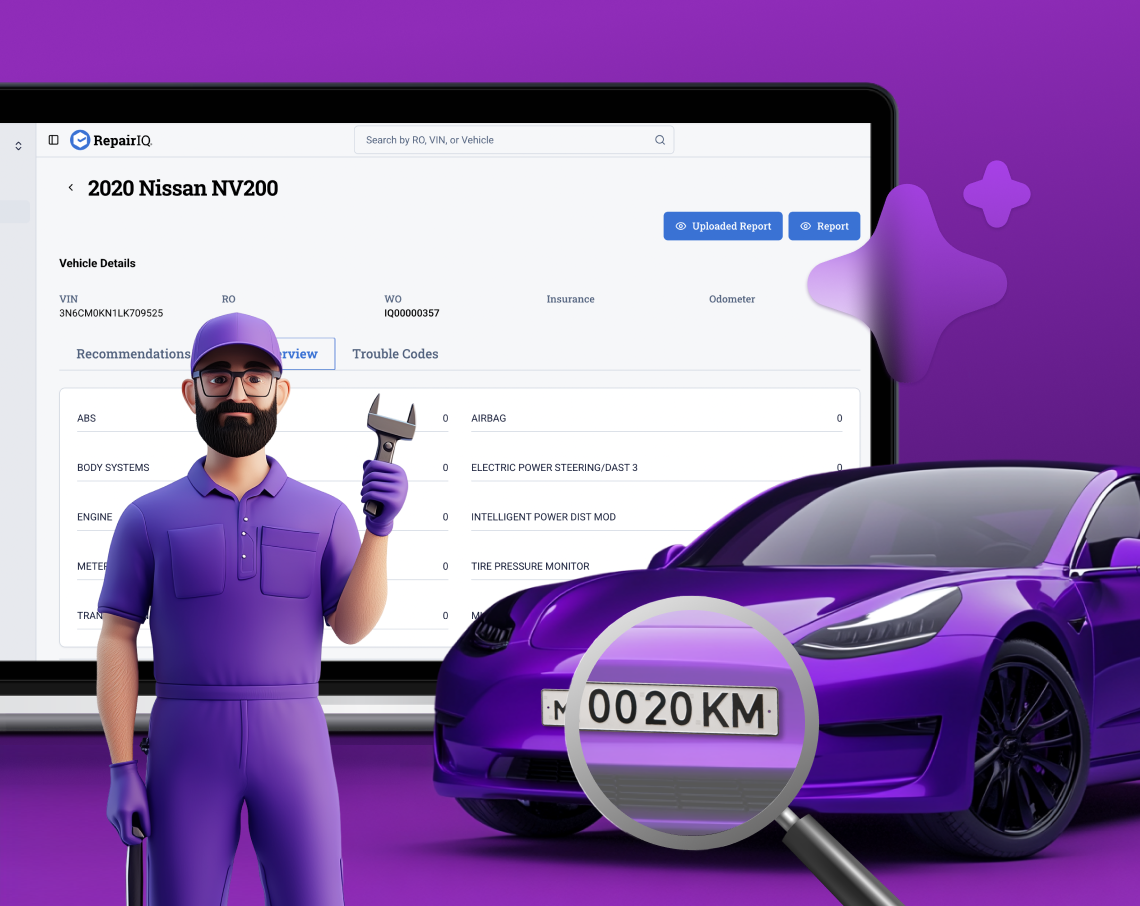
For example, in one of our projects to automate car service processes, the driver connects the device to the car and it automatically collects data on the condition of the car from engine errors to fuel level, and sends them to the cloud platform. There, the AI analyzes the information and issues a detailed report: what problems are there, what needs to be fixed, and where it can be done. Everything happens without the involvement of a mechanic at the first stage — the data is collected and analyzed automatically.
Installing sensors
Sensors are installed on the object (device, transport, equipment) that record parameters: temperature, pressure, vibrations, speed, location, etc.
Data collection
The sensors continuously or periodically read the values and convert them to digital or analog form.
Data transmission
The received information is transmitted to the server or to the cloud via available communication channels — mobile network, Wi-Fi, radio, satellite, etc.
Analysis
The data is processed using algorithms. The system detects anomalies, tracks trends, and can predict possible deviations or breakdowns.
Management
Telemetry in digital products encompasses several types of data, each of which plays a different role in surveillance and monitoring.
Events and messages recorded by the application during operation. Logs help you understand what happened and when.
Numerical indicators that characterize the state of the system: response time, CPU load, number of active users, errors, etc.
Call chains between application components are especially relevant for microservice architecture. They help to track the request path and find the "bottlenecks".
To collect telemetry in software products, code instrumentation is used — the introduction of special libraries that automatically track the necessary events, metrics, and routes during application execution.
The collected data may:
be immediately transferred to the monitoring system;
first, they are processed in intermediate components — agents or collectors, where they are filtered, normalized and exported to third-party services.
Previously, different standards and tools were used for logs, metrics, and traces. This complicated the monitoring setup and analysis. Over time, the industry has come to a more universal solution: a single API and data format compatible with different programming languages and platforms.
This concept is actively supported by major players such as Google, Microsoft, Amazon and the OpenTelemetry community. It allows you to get a complete and consistent picture of what is happening in the system, from user requests to interactions between microservices, databases, and external APIs.
Hardware telemetry — data is received from physical devices: sensors, controllers, meters, GPS, etc.
Software telemetry — data is collected from programs: mobile applications, web services, and operating systems.
Wired — used in stationary systems (for example, in industry).
Wireless — Wi-Fi, Bluetooth, mobile networks (3G/4G/5G), satellite communications.
Periodic — data is transmitted at a set interval (once per minute, hour, day, etc.).
Continuous (real—time) - data flows without delay, which is important for transportation or medicine.
Technical telemetry — diagnostics of devices, monitoring of indicators (for example, engine temperature).
User telemetry is tracking user behavior in applications or on a website.
Operational telemetry — monitoring of business processes, logistics, and services.
Today, telemetry can be found in almost any industry where it is important to monitor the condition of facilities, respond promptly to changes and make decisions based on data.
Here are just a few examples:
Meteorology — sensors record temperature, humidity, pressure, and wind speed, helping to make accurate forecasts.
Geology is used to monitor seismic activity, ground movement, and mine conditions.
Healthcare systems monitor patients' pulse, blood pressure, and oxygen levels in real time.
Telecom operators monitor the condition of the equipment, network load and signal quality.
Transport — telemetry helps you track routes, fuel consumption, and the technical condition of vehicles.
For example, in our Astech project on the development of a cloud platform for auto diagnostics, we implemented data collection through the diagnostic connector OBD-II. The system analyzes sensor readings, detects malfunctions using AI, and generates reports with repair recommendations. This helps service stations and car owners to make quick decisions based on objective data.
OBD (On-Board Diagnostics) is an integrated vehicle diagnostic system. Through a special connector (usually under the steering wheel) it allows you to read data about the condition of the car: engine speed, errors, fuel level, temperature, speed and much more.
The most common standard is OBD-II. It is found in almost all cars produced after 2000. Scanners or telemetry devices are connected to it in order to receive technical information about the car in real time.

The integration of the telemetry system is a "convenient monitoring" and a full—fledged business development tool.
|
Effect |
How it works |
|
Transparency of processes |
The full picture of what is happening in the system: from user actions to the internal logic of applications. |
|
Quick diagnosis |
For example, in an automotive platform, telemetry allows you to identify malfunctions before visiting a service station. |
|
Smart automation |
AI can analyze the received data and offer optimal solutions. Using the example of our Astech project in auto diagnostics, this is the selection of suitable spare parts and repair plans. |
|
Security and control |
Video surveillance systems with license plate recognition record stolen cars and transmit the data to police databases. |
|
Integration with ecosystems |
The data can be useful not only for the product itself, but also for partners: insurance companies, equipment suppliers, and analytical platforms. |
In developing telemetry solutions, in addition to data collection, attention should be paid to:
architecture scalability (especially in the microservice model);
reliability of data transmission and storage;
security and encryption when transmitting sensitive information;
synchronization with external sources (for example, government databases or insurance APIs).
In our case, working with a car service platform, we are faced with the integration of dozens of data sources: from automotive sensors to external registries. At the same time, it was important to ensure the stability of the system under high load and the fast response of interfaces for service station users.
The future of telemetry belongs to "smart" solutions. Artificial intelligence, automation, and integration with other services are already becoming the norm, not the exception.
Telemetry is the automatic collection and transmission of data in real time, whereas monitoring is rather the observation of information already collected. In simple terms, telemetry is the basis on which monitoring is built.
Security depends on the implementation: modern telemetry systems use encryption, data link protection, and access control. This is especially important in medicine, the automotive industry, and user applications.
Telemetry is needed by everyone who works with equipment, data, and digital services.:
car services and logistics — for diagnostics, tracking and predictive maintenance;
medicine — for remote monitoring of patients' condition;
industry and energy — to monitor the operation of equipment and prevent accidents;
business — for making decisions based on objective data;
government and security agencies — for real-time monitoring, accounting, and analysis.