
A modern car is no longer just about a vehicle, but about a "smart system" on wheels. Diagnostics, updates, navigation, communication with services and applications — all this makes the ecosystem around the car more digital and complex. Today, through a smartphone, you can sign up at a service station, buy a car, insure it, rent it, monitor its technical condition in real time, and even refuel it.
Let's see how it works using the example of Tesla. The car downloads and installs updates "over the air" by itself — the autopilot is improved, new functions are added, and energy efficiency is increased. The telemetry system monitors battery charge, tire wear, temperature, and errors and warns the driver in advance. Through the mobile app, you can remotely turn on the heating, open the doors, call a car from the parking lot, or view the route.
In this article, we will tell you which functions should be embedded in a mobile and web application so that they really work for your business - and how to automate processes in the automotive ecosystem with their help.
Application development in the automotive industry is necessary in order to make business productive — to automate recording, speed up maintenance, reduce staff workload and simplify communication with customers. You can also connect:
The functions of the mobile and web application help to improve the quality of service, retain customers and build a stable system of repeat sales.
The following are the main directions for the development and development of systems in demand in the automotive industry today.
|
Direction |
Features and functions |
|
Car service stations and service stations |
|
|
Telematics for cars |
|
|
Automotive and spare parts marketplaces |
|
|
Car insurance |
|
|
Leasing and car loans |
|
|
Banking services for car owners |
|
|
Carsharing and auto by subscription |
|
|
Car enthusiasts clubs and loyalty |
|
|
Software for car dealers |
|
|
Car marketplaces (purchase/sale) |
|
The sooner businesses in the transportation industry begin to implement digital solutions, the faster they will adapt to new customer habits and gain a stable market position. In practice, mobile and web applications are already being actively implemented - a number of strong solutions have been formed in the CIS, covering the main areas: from telemetry and carsharing to car loans and CRM for car services.
For the transportation industry, the development of a mobile application and a web platform is:
Less chaos means more consistency. All processes — from recording to communication — are combined in one solution.
Repeat sales and loyalty. Reminders and personalized suggestions bring the customer back into the funnel on time. You can potentially recover up to 15% of lost calls without additional investment in advertising.
Automation without data loss. Integration with CRM, ERP and telematics for cars eliminates duplication: the entire customer history, fleet movements and technical data are updated in real time and immediately transmitted to the right departments.
A transparent business picture. Data on income, workload, demand, and staff effectiveness help you make decisions based on facts rather than feelings.
Rapid monetization of related services. The application allows you to access leasing, insurance, penalty payments and other financial products without visiting the office.
For clients:
Comfort without waiting. The opportunity to make an appointment, clarify details or ask a question at any time.
Transparency and confidence. The client knows exactly how much the service costs, when to arrive, and what options are available — no surprises during the service process.
Control over the car. Smart notifications and telemetry tell you when to change the oil, go through maintenance, or apply for insurance.
Save time and money. Online ordering of spare parts, promotions, bonuses — the application makes services not only affordable, but also profitable.
Here is an example of how a car service application helps businesses become more efficient and customers receive prompt service.
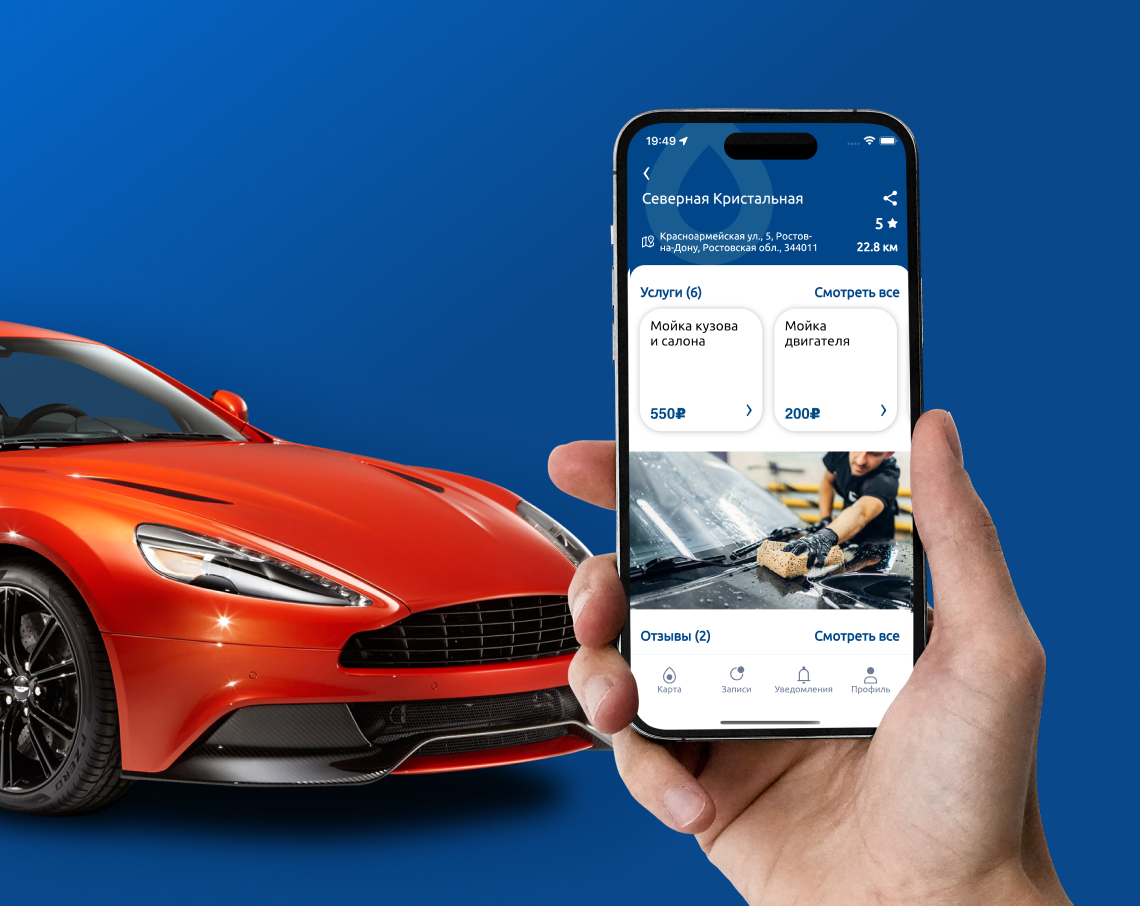
At the height of the season, phones in car dealerships and service stations are literally bursting with calls. Managers don't have time to respond, they lose applications, and customers get tired of waiting on the line and just go to competitors. For the REKAUTO company, we implemented a project (a mobile car service aggregator) that combined service stations, car washes and tire repair shops on one platform.
The mobile car service application makes it easy for drivers to find and book the services they need, and for managers to manage schedules, orders, and customer base. Filtering tools, a rating system, and a loyalty program have strengthened the competitive position of RECAUTO's customers in the market.
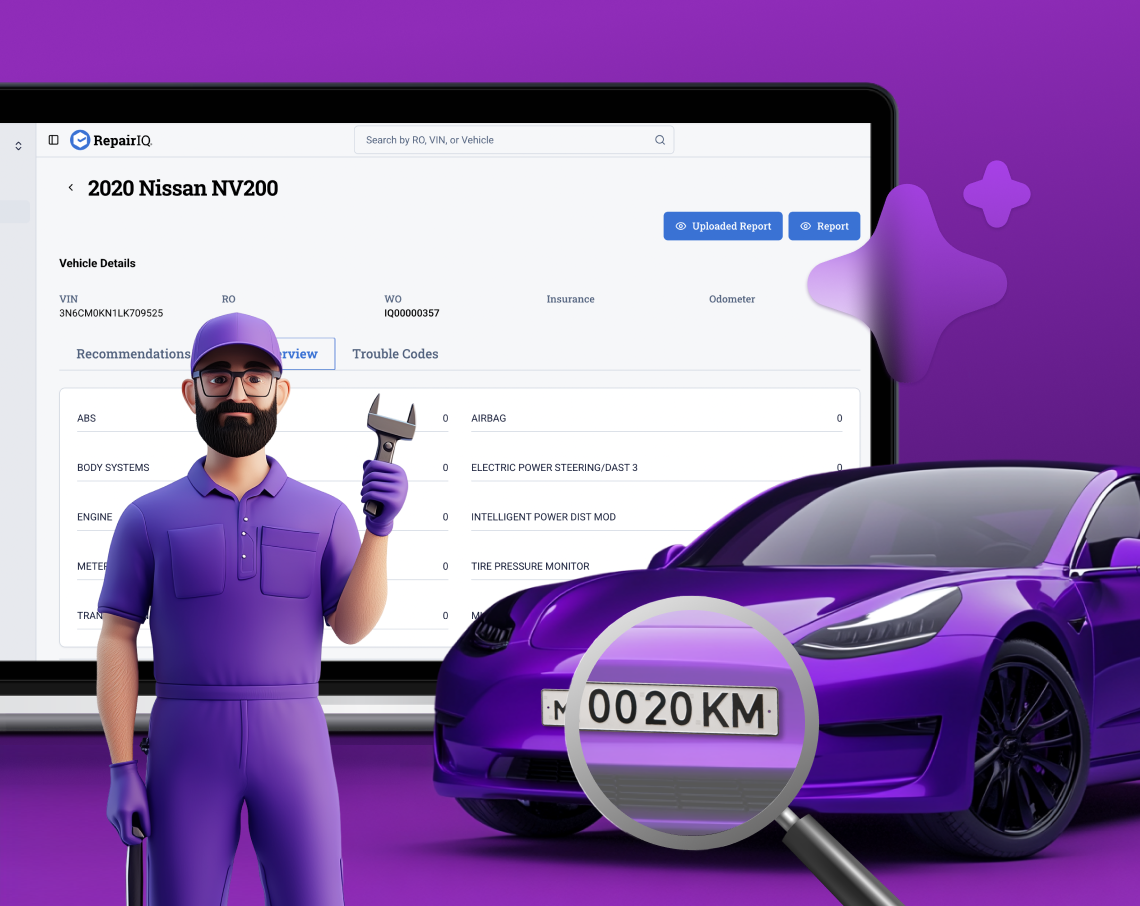
In one of our projects, we developed a platform that automated non-obvious but important processes. For example, recognition of VIN codes and LPR scanning of license plates made it possible to immediately identify the car model, speed up diagnostics and shorten the client's reception time. Integrations with the databases of the traffic police, insurers and spare parts suppliers provided access to up-to-date information, and the built-in AI diagnostics predicted possible breakdowns, selected the necessary parts and suggested the nearest service station where the necessary equipment and a free slot were available.
The LighTech team has implemented a cloud-based car service platform. Initially, it was conceived as a compact tool for rapid car diagnostics, but during the development process it was transformed into a large-scale cloud platform. Today, Astech is a combination of a mobile application, a web interface, telematics data, and AI analytics.
The solution allows all participants in the process to work in one window.: drivers, mechanics, and managers. As a result, the business received a powerful management tool, and customers received high—quality and fast service without unnecessary calls and paperwork.
Project planning
We define the goals: it can be the digitalization of processes in a car dealership, a service station aggregator, logistics, a fleet or an insurance company. We are thinking over the architecture: what roles will be in the system, what business processes need to be automated.
Interface Design
We are creating an application structure for all roles: from the client and the logistics coordinator to the center operator or the fleet administrator. We are working on UX/UI design, dashboards, schedules, chat, spare parts search, etc.
Functional development
We implement modules suitable for your segment: online booking, service search, connection to telematics and GPS, mileage analysis, maintenance recommendations, visualization of vehicle status or delivery.
Testing
We are testing the software: speed, stability, security, adaptation to different devices.
Release and maintenance
Digital solutions in the automotive industry increase revenue by:
automation of online recording, payment, notifications — less customer losses;
integration with related services (insurance, loans, spare parts) — additional sources of income;
personalized marketing — higher engagement, higher frequency of repeat requests.
Such processes can be automated and optimized using a mobile and web application.:
Online booking and service station schedule.
Notifications and customer feedback.
Fleet management and vehicle status.
Telematics, data collection and analysis from the vehicle.
Maintaining a history of maintenance and diagnostics.
Integration with CRM/ERP, insurers, banks, traffic police, etc.
Yes. This is the key to a smart ecosystem.:
AI diagnostics predicts malfunctions;
Real-time telemetry shows mileage, errors, driving style;
AI modules provide recommendations on maintenance, rubber change, insurance;
VIN, LPR recognition, and database integration simplify working with data.