According to analysts, from 2026 to 2035, the Internet of Things market will show significant growth, in particular in the field of transport and logistics. Real-time cargo tracking, fleet management, route optimization, and predictive maintenance are quickly becoming standard.
Devices are being installed everywhere: by 2026, hundreds of millions of telematics modules and embedded IoT solutions are expected in various fields, including agriculture.
As data continues to be collected and infrastructure grows, companies are increasingly asking a different question: How can this data be turned into understandable metrics, automated solutions, and business benefits?
In practice, the primary function of the IoT is not to collect information, but rather to facilitate management by linking device readings with employee workflows and financial indicators.
In this article, we'll examine how to correctly implement IoT applications. We'll cover what tasks they should solve, how to build an architecture, and what to pay attention to in order to automate processes, reduce costs, and assist with management decisions.
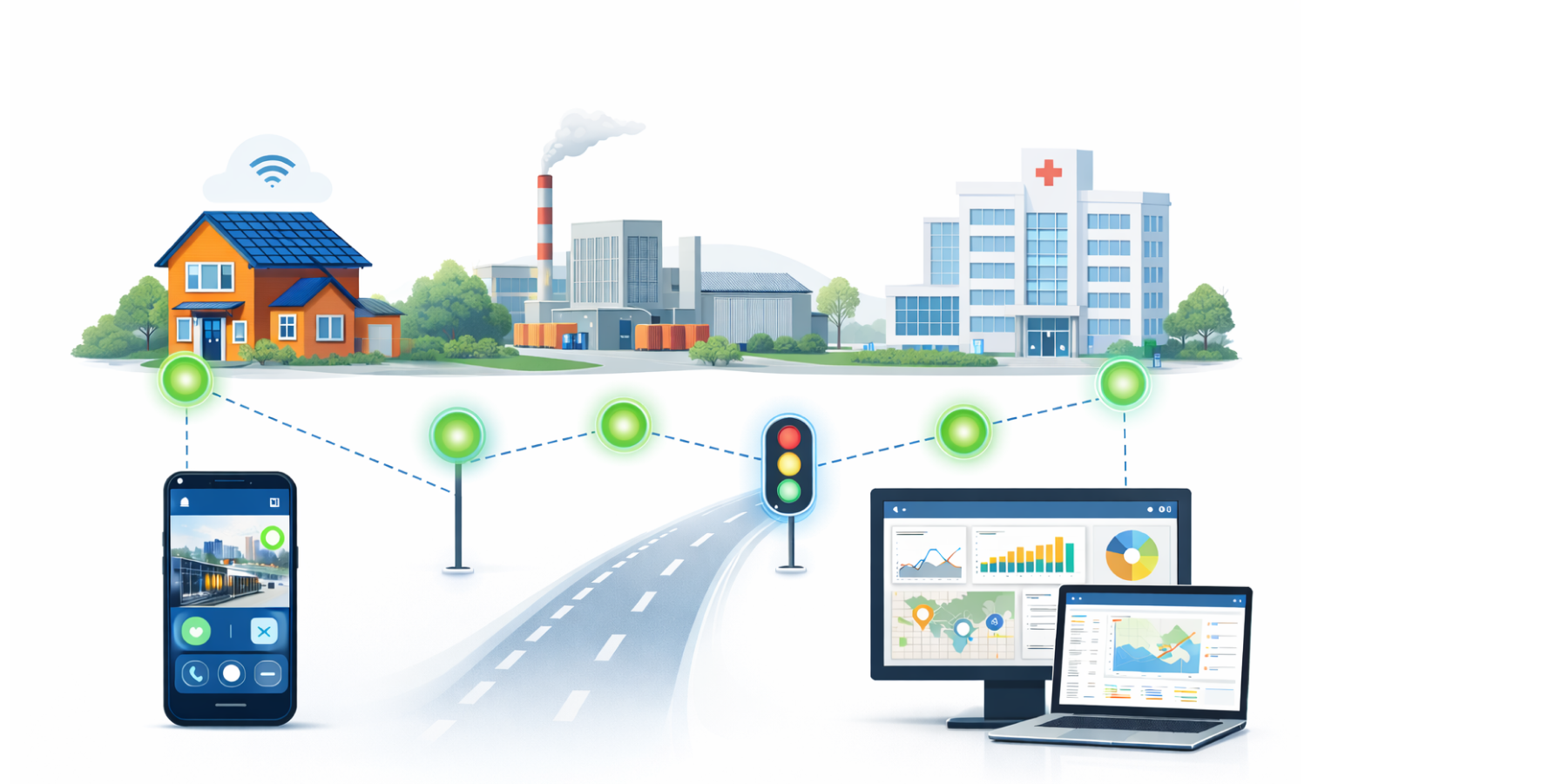
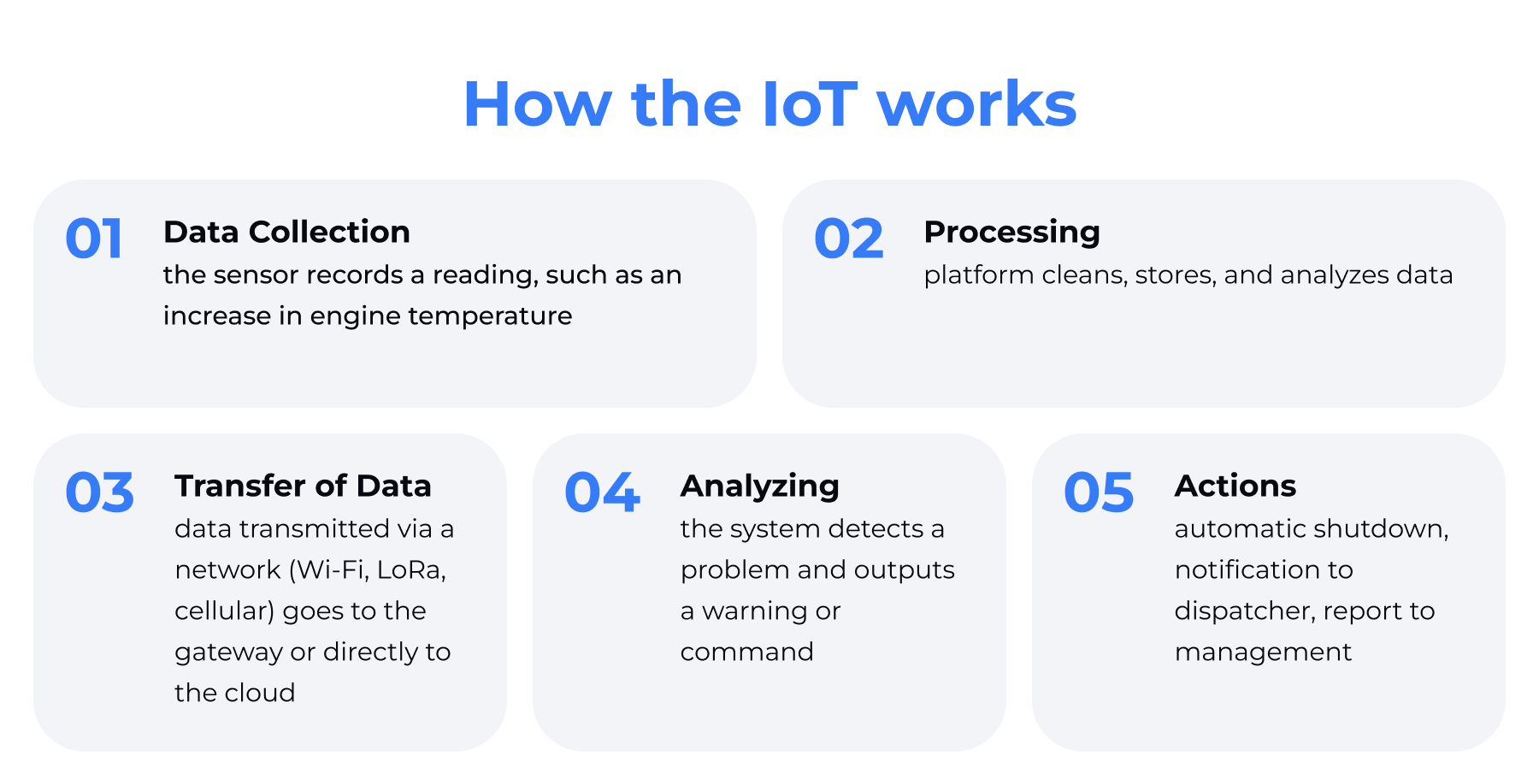
The Internet of Things (IoT) is an ecosystem in which physical objects automatically collect and transmit data over a network. Platforms then use this information for analysis, management, and decision-making.
The IoT is not about the devices themselves, but rather, the data and services surrounding them.
Sensors, counters, cameras, and onboard equipment are just the lower level of the system. They record events in real time and transmit the information further.
The main value of IoT is realized when:
IoT applications transform raw device readings into reports, notifications, forecasts, and management decisions.
To avoid further confusion, let's fix the basic terms.
|
Term |
Definition |
|
IoT device |
The «eyes and ears» of the system. They measure temperature, humidity, vibration, position, resource consumption, etc. (for example: a sensor in a refrigerator). |
|
The IoT system |
A set of devices, communication channels, and data processing platforms (example: the entire smart greenhouse from sensors to the cloud). |
|
IoT platform (usually in the cloud) |
The «brain» that collects, stores, processes data, and manages devices (for example: AWS IoT Core or ThingsBoard). |
|
The IoT solution |
Ready-made business tool: platform + applications + integration (example: production monitoring system with dashboards and API). |
|
IoT network and communication channels |
The «nerves» of the IoT system transmit data further (over the air — Wi-Fi, LoRa; over the wire — Ethernet). |
|
Applications and control panels |
The «hands and eyes» of a human. They show information on the screen and send reports (for example: a mobile application for a farmer). |
The IIoT (Industrial Internet of Things) is the targeted use of Internet of Things technologies in industries such as energy, transportation, logistics, and critical infrastructure.
This is where the increased requirements come in.
IoT is a multi-layered architecture. Communication and hardware are just the foundation; value is generated at the platform and application level.
The main purpose of the Internet of Things is to collect information and use it to optimize processes, reduce costs, reduce errors, and respond faster to changes.
An Internet of Things device is a physical object connected to a network that collects data, processes it at a basic level, and transmits it to an IoT platform or application.
As a rule, such a device has several key components:
The Internet of Things has firmly entered our reality, though we don't always notice. Examples include smart homes with smart lighting, smart locks, and smart sockets that monitor energy consumption; wearable gadgets such as fitness bracelets and watches; and remote health monitoring systems.
In an urban environment, IoT manages adaptive traffic lights, air quality sensors, parking spot detection systems, and trash container occupancy monitoring.
Below are typical examples of IoT devices and the tasks they solve in different industries.
|
Equipment |
Where it is applied |
Benefit |
|
Vibration and temperature sensors |
Manufacturing, industry |
Reduced downtime and predictive maintenance of equipment |
|
GPS trackers and telematics modules |
Transport, logistics |
Monitoring the location, routes, speed and condition of cargo |
|
Smart metering systems for water, heat, and electricity |
Services provided by the city include housing and communal services, as well as commercial real estate. |
Accurate accounting of resources without manual measurement |
|
Medical sensors and wearable devices |
Healthcare |
Remote monitoring of patients' condition and reducing staff workload |
The IoT network is the way in which sensors transmit data. There are two main types:
Gateways are often needed as a «translator» — they collect data from different devices and send it to the Internet.
|
Type |
Where is it better to use |
Range / Speed |
Energy consumption |
Application example |
|
Wi-Fi |
Indoors, offices, warehouses |
up to 50-100 m / high |
high |
Cameras, smart lighting |
|
LTE / 5G |
Transport, cities, and mobile facilities |
tens of km / very high |
high |
Truck trackers, drones |
|
LoRaWAN |
Long-range sensors |
2-15 km (in the city) / very low |
very low |
Counters, field monitoring |
|
NB-IoT / LTE-M |
Smart cities, counters, remote objects |
up to 10-20 km / low |
very low |
Water/gas meters in basements |
|
MQTT / CoAP |
Message transmission (over any network) |
— |
low |
Almost all modern IoT platforms |
MQTT is the most popular protocol for data transmission: lightweight, reliable, and works even with poor Internet connection. CoAP is similar, but even lighter and better for very simple devices.
The IoT platform is responsible for the stable and scalable operation of the entire infrastructure. It manages thousands and even millions of devices: it allows you to connect new sensors, update firmware, temporarily disable equipment and monitor its condition. For businesses, this means system manageability without manual labor or constant facility visits.
The platform collects and stores all data from the devices in one place. We're not talking about dozens of indicators; we're talking about information flows that can amount to billions of events. The IoT platform doesn't just add up this data; it brings it into a convenient format for analysis.
The next key layer is analytics. The IoT platform creates graphs, monitors discrepancies, generates alerts, and identifies patterns in equipment or process behavior. At this level, predictive maintenance scenarios, deviation control, and preliminary management insights emerge.
Through the API, the IoT system integrates with CRM, ERP, monitoring, billing, and mobile applications.
In practice, an IoT platform can be either a ready-made cloud solution or a custom development. Ready-made cloud solutions (AWS IoT, Azure IoT, Yandex IoT Core, and similar) are suitable for launch or pilot deployments.
For the intelligent video surveillance and video analytics project, we decided to develop a fully proprietary cloud platform from scratch, including the backend, API, device agent, and frontend:
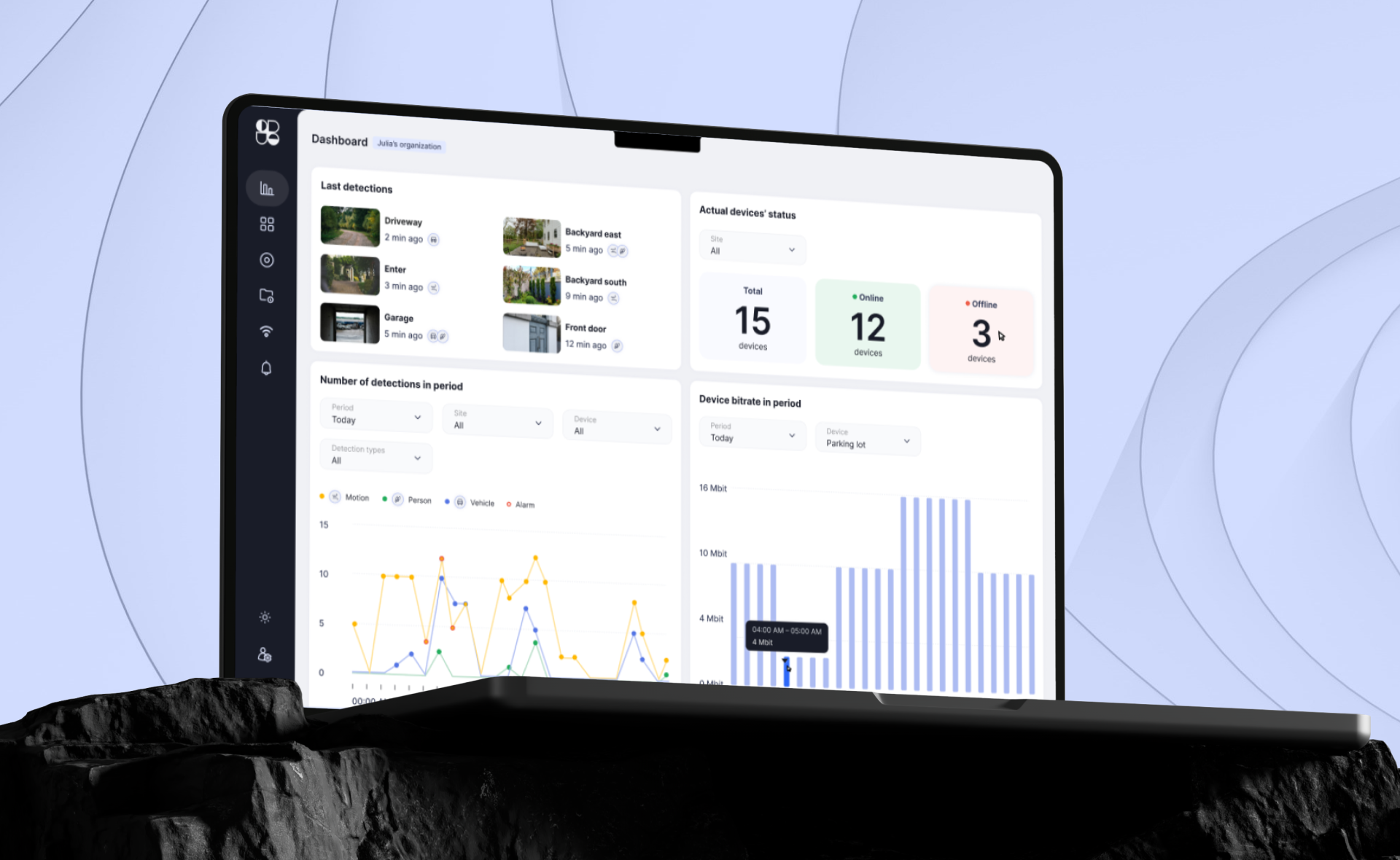
Such a level of customization, independence from the vendor, and adaptation to enterprise customers (ranging from small businesses to government agencies and infrastructure) would not have been possible with a ready-made platform. Therefore, its own implementation became the optimal solution to achieve the required reliability, scalability, and competitive advantages. We wrote more about the case here.

IoT devices themselves do not provide value. While sensors can collect and measure information, the packaging of data into solutions begins with applications.
The application displays telemetry, shows the current state of objects, allows you to manage IoT equipment, configure scenarios, and receive analytics.
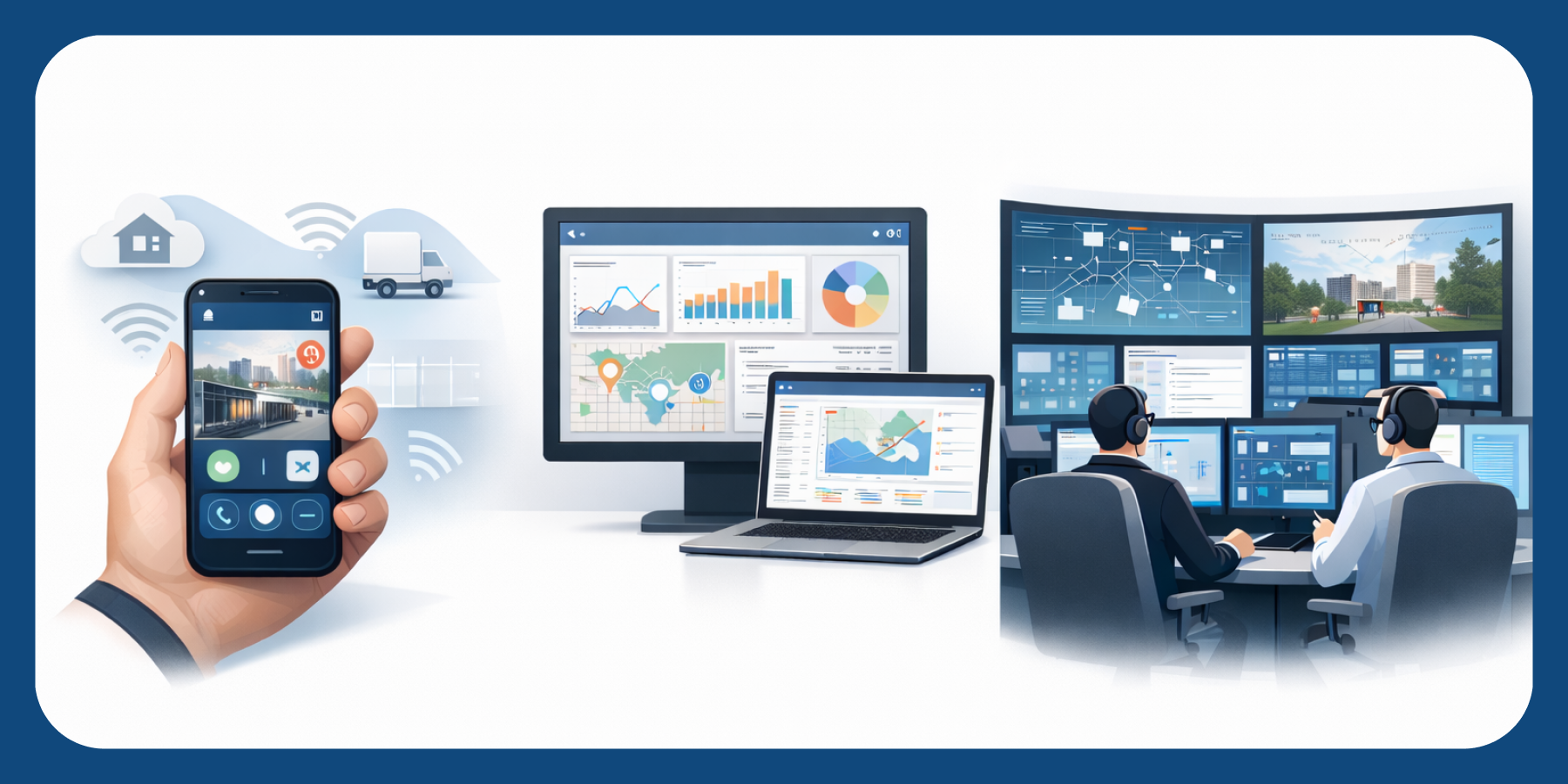
Mobile IoT applications are used more often where immediate operational access is needed:
These types of solutions are in demand in logistics, construction, and industry, as well as in any other area where decisions are made outside the workplace.
Web applications and dashboards are the main analytics and management tool at the business level. The whole picture of the IoT system is concentrated here:
Web dashboards allow dispatchers, analysts, and department heads to see the entire process, not just a single sensor.
For complex infrastructures, separate dispatch interfaces are created, often for a specific industry or scenario:
Such systems operate under high load, support roles, SLA logic, and crash scenarios, and are often integrated with ERP, CRM, 1C, and BI systems.
|
Area |
Business objectives |
IoT solutions |
|
Industry (IIoT) |
Reducing equipment downtime |
Siemens, Bosch, GE — digital factories, real-time monitoring |
|
Logistics and transport |
Fleet and cargo control |
Amazon, DHL, Maersk — container and fleet tracking, dispatch platforms, route analytics |
|
Smart buildings and offices |
Reduced energy consumption |
Google, Microsoft, WeWork — smart offices, BMS, climate and lighting management |
|
Medicine |
Remote monitoring of patients |
Philips, Medtronic, Apple Health — ecosystems, wearable medical devices, equipment tracking |
|
Retail |
Preventing «out of stock» situations |
Walmart, Amazon Go — smart shelves, RFID (radio frequency identification), video analytics, store automation |
|
Agriculture (AgriTech) |
Increasing yields |
John Deere, Bayer, Trimble — precision farming platforms, automatic irrigation, crop and animal monitoring |
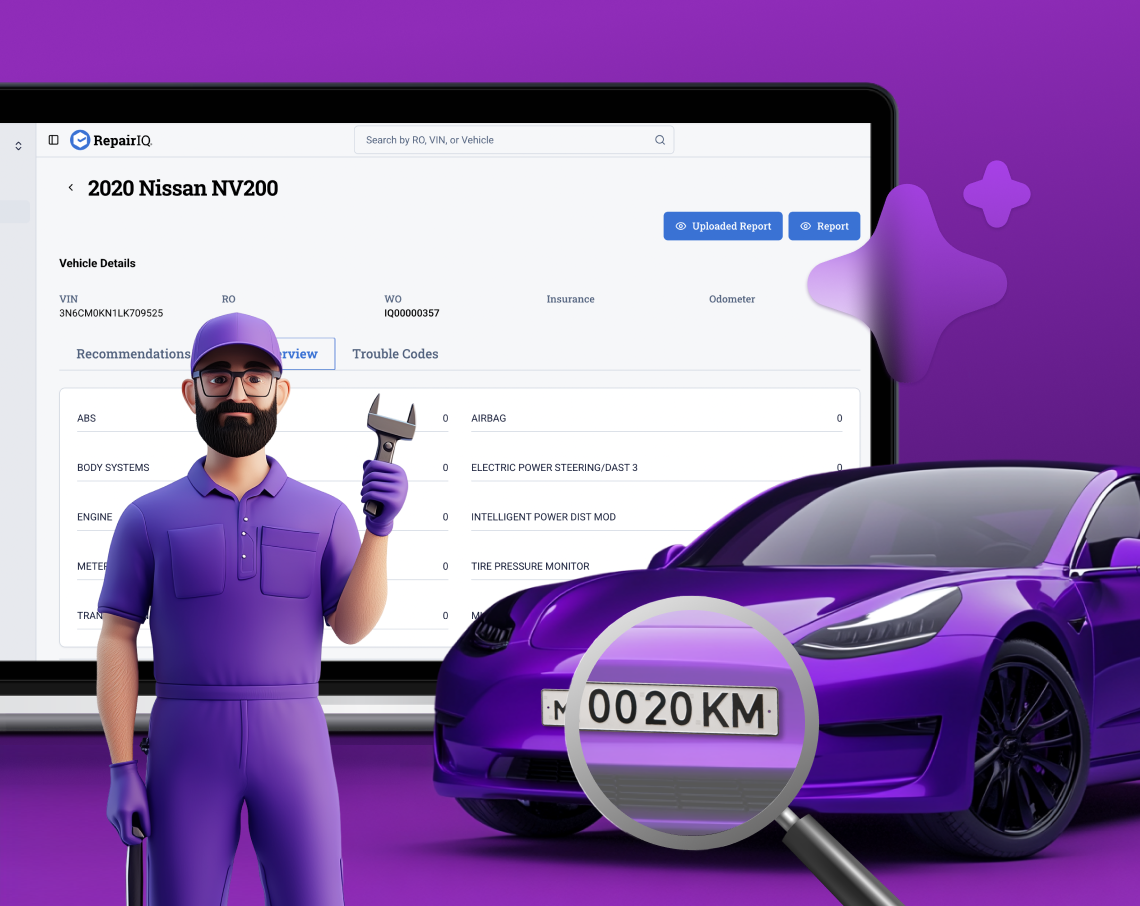
The LighTech team developed a cloud-based IoT platform built on microservices. This platform transforms standard car diagnostics into smart digital services, enabling car service stations and owners to work more efficiently and quickly.
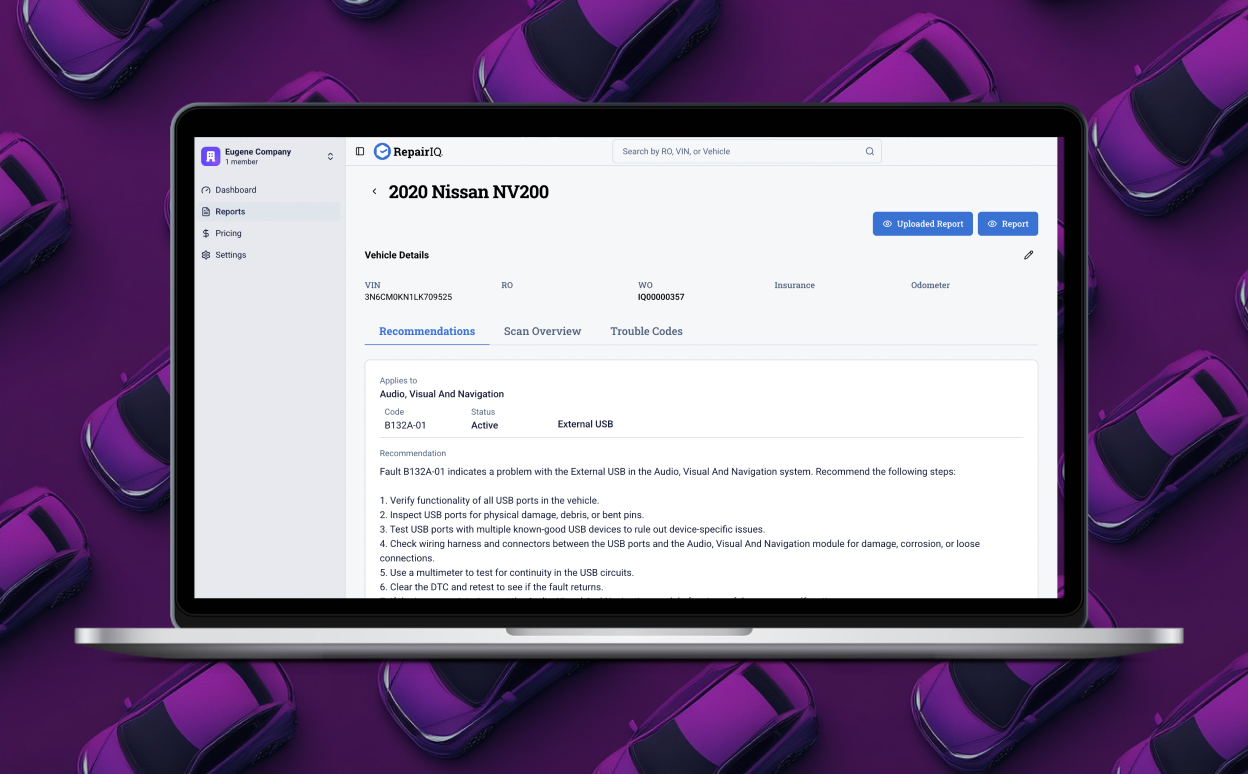
What the platform can do:
Our goal was to automate routine car service processes, reduce downtime, improve diagnostic accuracy, and create an ecosystem of data exchange between services, owners, and partners.
The platform has helped owners save time and money by providing quick access to clear reports and recommendations. Due to its integration with police databases, it is possible to quickly identify stolen cars. The subscription model transforms the service into a smart IoT service with predictive diagnostics, remote monitoring, and sensor and camera connectivity.
Our team has developed an IoT solution for agricultural businesses based on the «pocket farm» concept. This solution allows farmers to track important crop indicators, such as temperature, precipitation, watering, and productivity, in real time.
The platform collects data from sensors, visualizes them through convenient diagrams, diagrams and dynamic graphs, and coordinates the work of employees for operational management of farming processes.
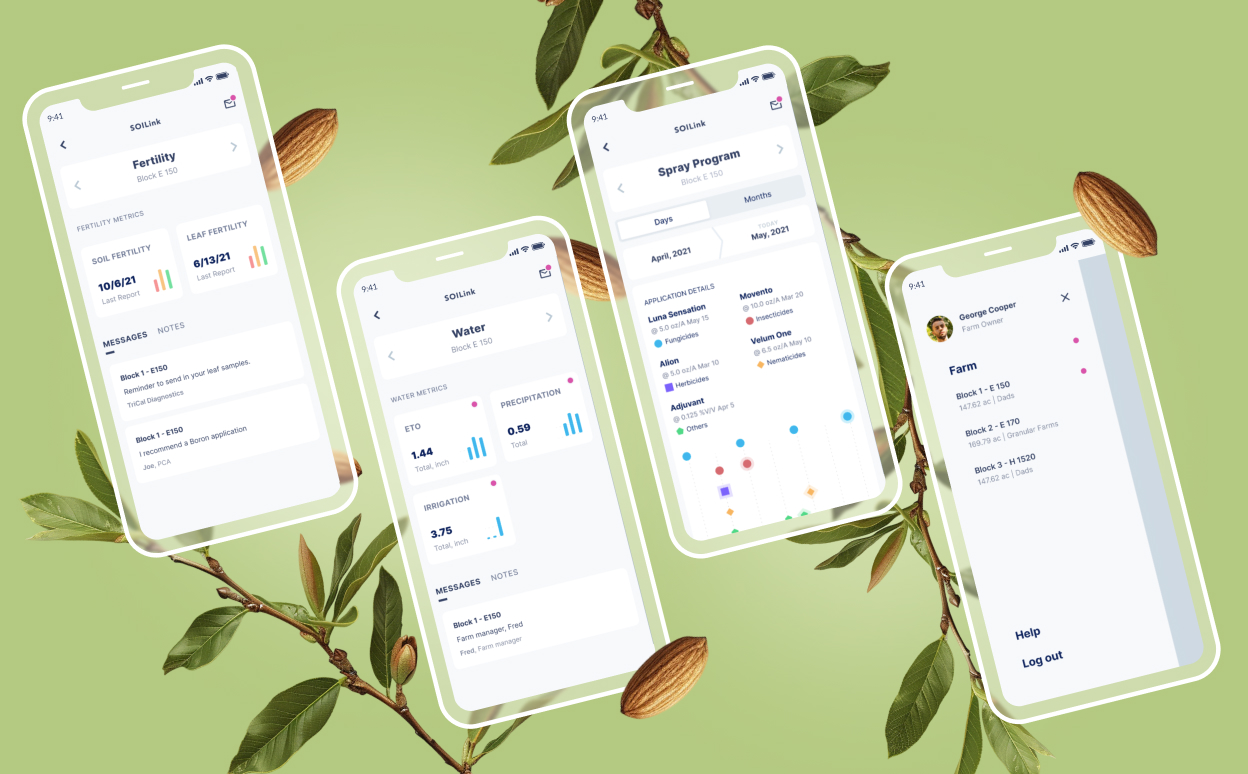
The result is optimized crop processing, reduced production costs, and the ability to respond to the needs of plants in a timely manner. Integrating IoT data increases the efficiency of farming businesses by enabling them to make accurate decisions and prevent agrotechnological problems.
Process audit
Scenario design
We study current operational and management processes, including equipment maintenance, incident control, analytics, and reporting. We design the architecture of the IoT platform, the business logic, and the work scenarios, including how data is collected and processed to inform decision-making.
Our goal is to determine the optimal data transfer method or hybrid solutions. We consider coverage, connection stability, and security.
Application
Testing
Implementation, support and scaling
Every device on the network can become an access point for attacks, so it is important to protect data and infrastructure. Key measures include data encryption, device authentication, and regular updates to firmware and platform software, as well as API protection and network segmentation.
Monitoring of abnormal device behavior and secure configuration help prevent leaks, data substitution, DDoS attacks and physical compromise of equipment, ensuring reliable operation of IoT systems in real time.
The future of the Internet of Things is linked to the rapid growth of IIoT and the expansion of the use of smart devices in logistics, retail and other areas. More and more companies are using IoT to optimize processes and decision-making based on analytics, turning disparate devices into a single managed ecosystem.
There's an 80% chance that you, dear reader, have a smartwatch on your hand right now!
Classical automation works according to predefined scenarios. The IoT goes further — it creates an objective digital model of reality that is constantly being updated.
100 тыс.+ пользователей и 3000 часов разработки — Flutter MVP за 3 месяца
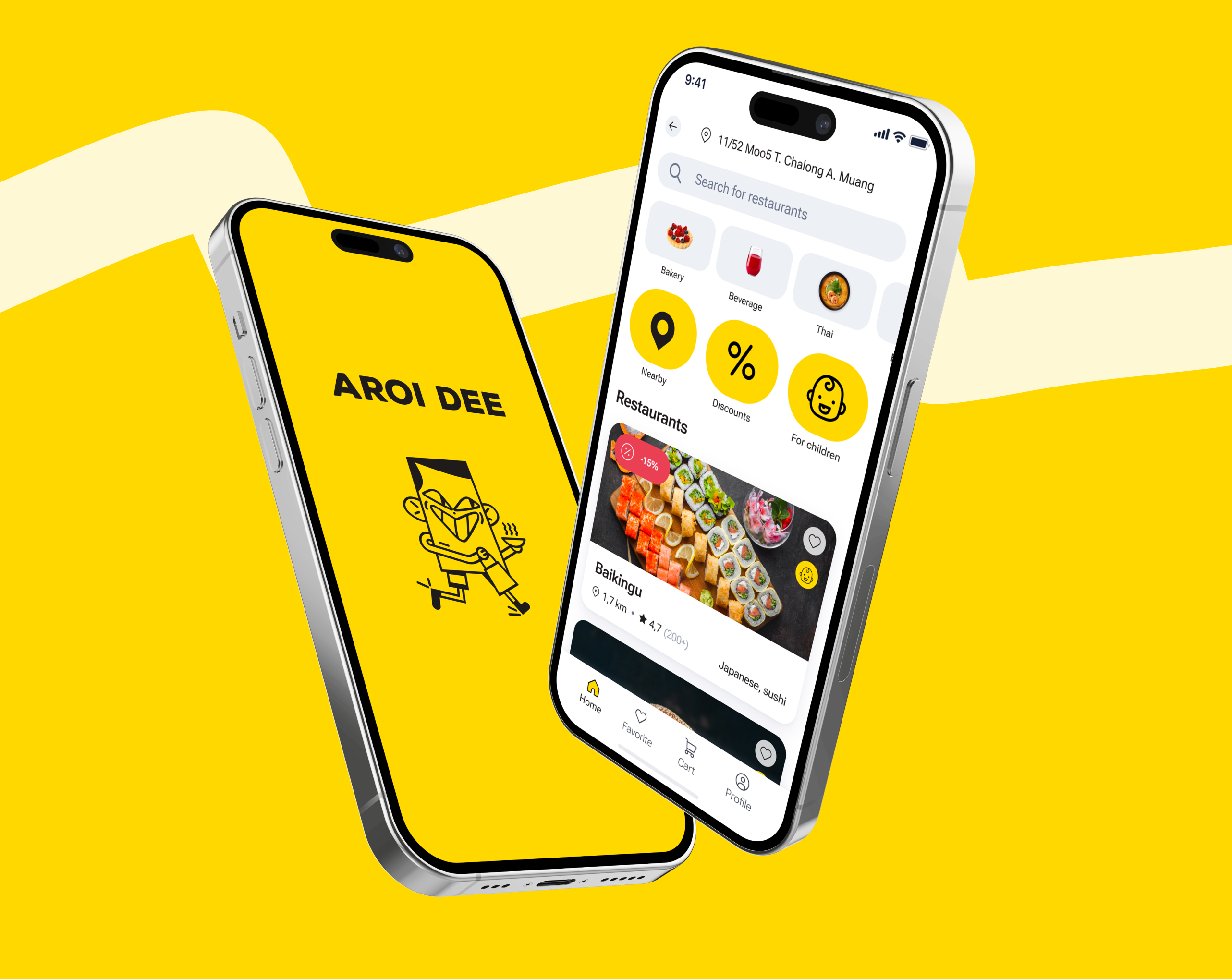
Тысячи скачиваний и шорт-лист Рейтинга Рунета — экосистема доставки еды на Flutter для Пхукета
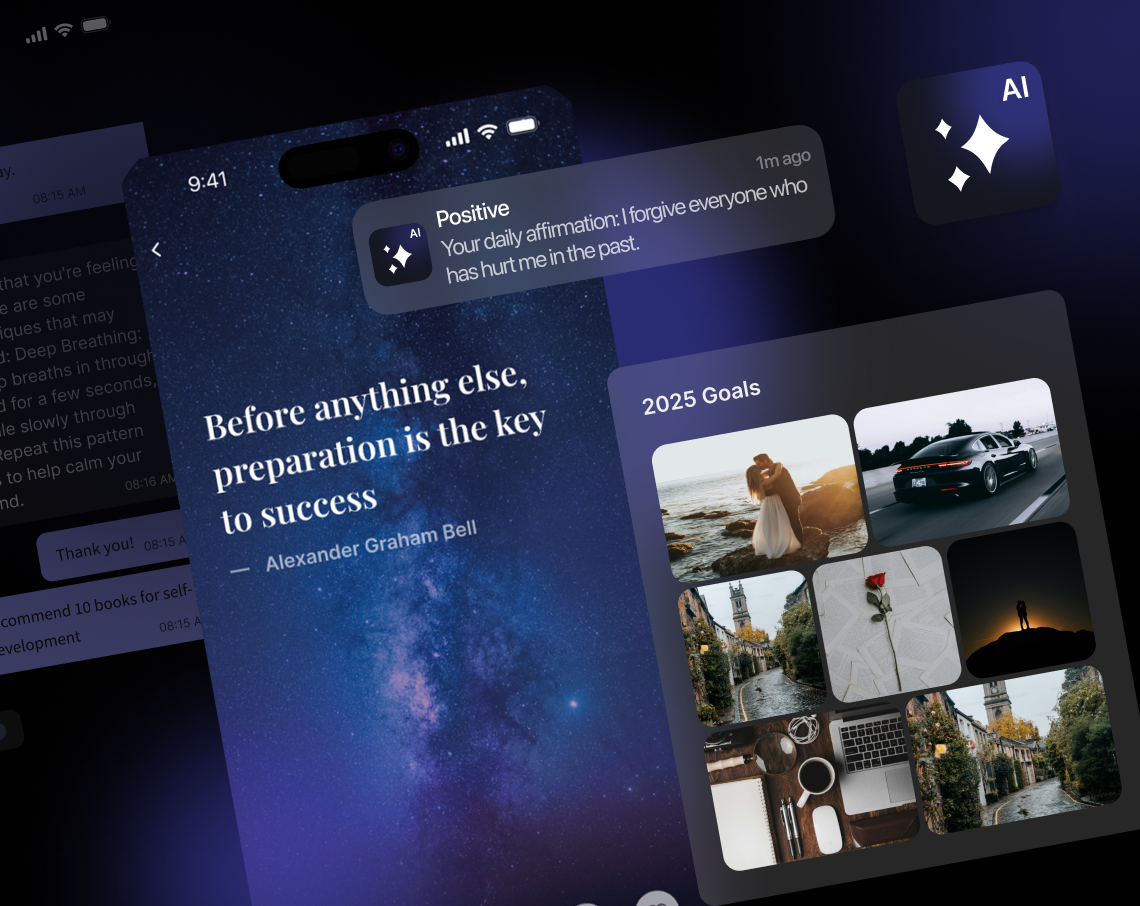
Flutter-приложение с ИИ-ментором — трекер привычек, который помогает обрести спокойствие и рост